You found the Carhartt section at a workwear shop, and three duck canvas jackets are hanging in a row — the Detroit, the Bartlett, and the Active Jac. They’re all made from the same heavy cotton duck canvas (a densely woven, abrasion-resistant fabric originally developed for sails and work tents), they all come in brown duck and a handful of other colorways, and they’re all priced within roughly sixty dollars of each other. On a hanger, the differences are subtle enough that you’ll squint. On your body, in the field, after a season of wear — they are meaningfully different tools. This article breaks down exactly how they differ in fit, construction, warmth, and long-term value so you can make the right call before you order. Because with Carhartt duck, the single most expensive mistake you can make isn’t buying the wrong model — it’s buying the wrong size of the right one.
What You’re Actually Choosing Between
Before comparing these three jackets intelligently, it helps to know what each one is optimized for.
The Carhartt Detroit Jacket (J001)
Carhartt
$119.99
In stock on Amazon
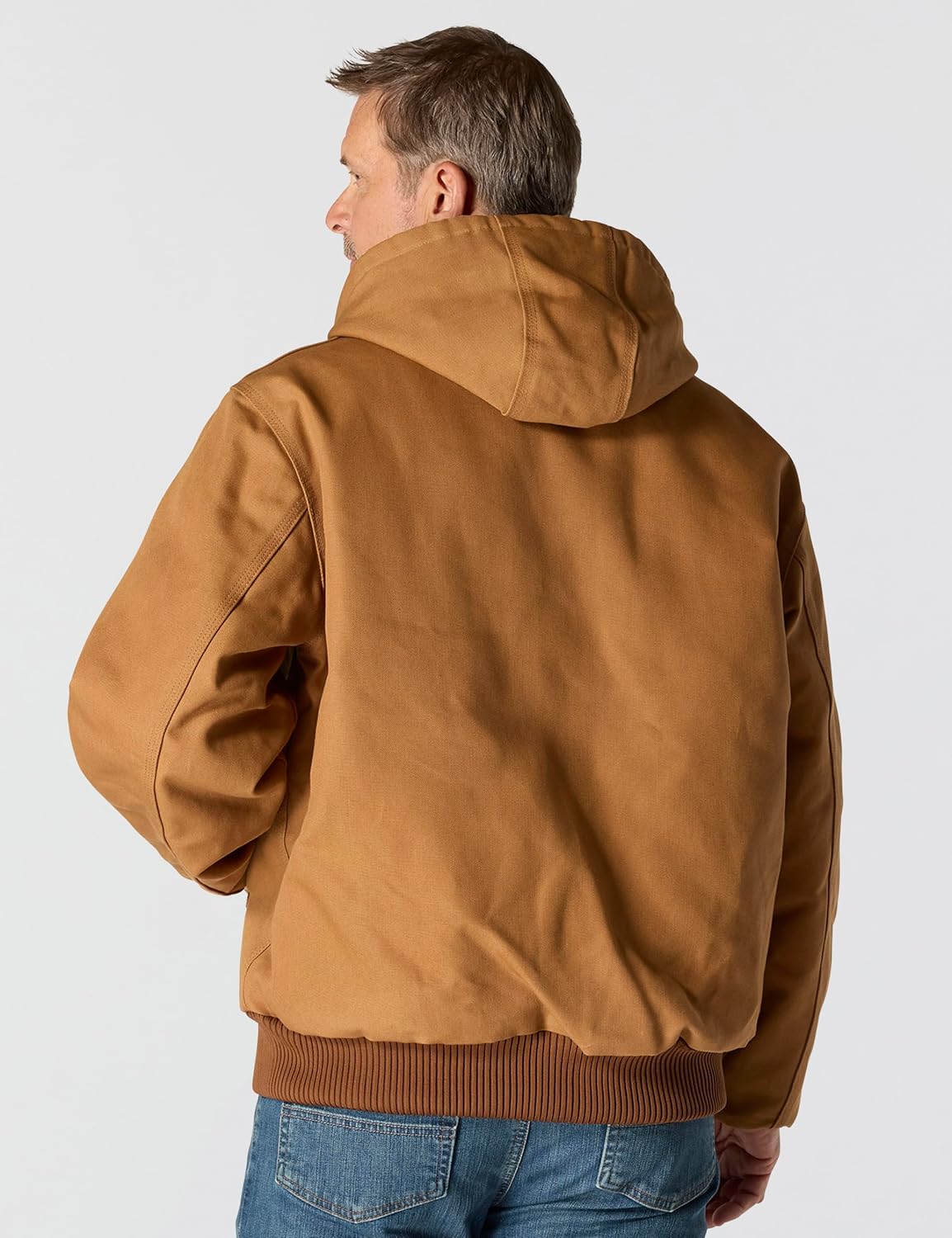
Check price on AmazonThe Detroit Jacket (style J001) is the original. It has been in Carhartt’s lineup for decades and is probably the closest thing workwear has to a canonical item. According to Heddels’ brand history piece on carhartt.com (published on heddels.com, titled “A Brief History of Carhartt”), the Detroit represents Carhartt’s foundational approach: heavy 12-ounce duck canvas, a flannel lining, a blanket-style collar, and enough room in the body to layer over a sweatshirt without binding at the shoulders. It is built for durability first, with bar-tacked stress points and triple-stitched seams. Think of it as the workhorse — not technical, not fashion-forward, just extremely good at what it does.
Primer Magazine’s “Carhartt Detroit Jacket Review” (primermagazine.com) is one of the more thorough editorial write-ups available on this jacket, and it characterizes the Detroit as a three-season jacket for most climates, best paired with a mid-layer in genuine cold. That framing holds up against broader owner feedback: the Detroit shines from early fall through late spring and handles moderate winter with the right base layers underneath.
Carhartt
$119.99
In stock on Amazon
Check price on AmazonThe Carhartt Bartlett Jacket
Carhartt
$124.99
In stock on Amazon
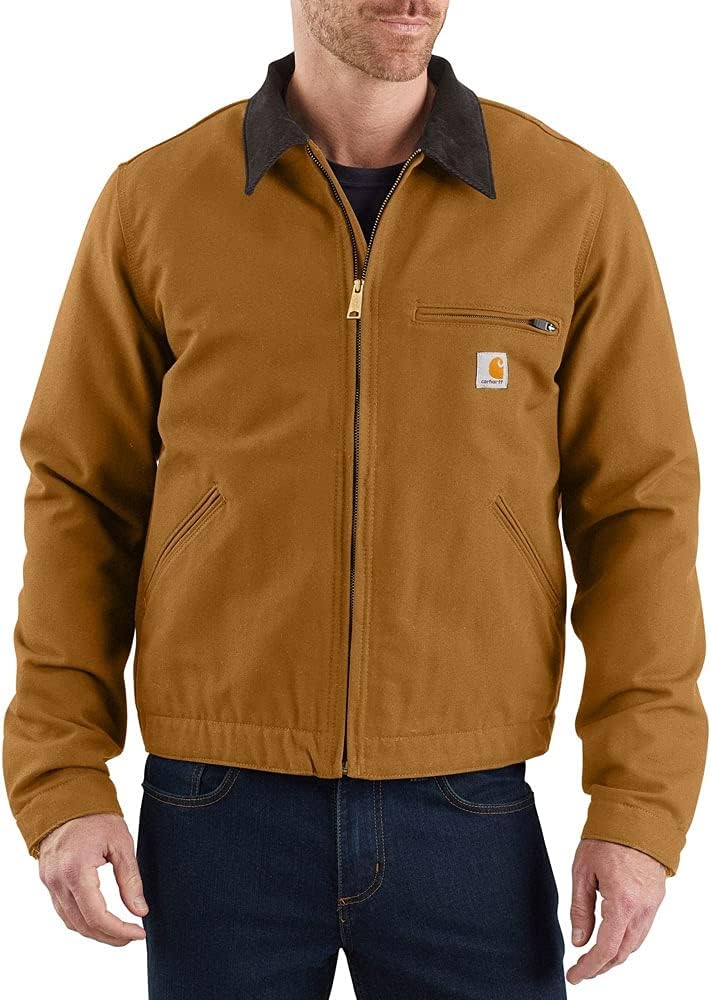
Check price on AmazonThe Bartlett Jacket is a step up in construction refinement. It shares the same duck canvas shell weight as the Detroit but adds a key functional upgrade: articulated back panels that allow you to extend your arms overhead without the whole jacket riding up. For anyone who spends time on a ladder, loading trucks, or working overhead in general, this detail is immediately noticeable and not cosmetic. Owner reviews aggregated on Working Person’s Store (workingpersonstore.com) consistently identify the back-panel construction as a genuine job-site feature — the kind of thing you don’t appreciate in the store but notice by the end of your first shift.
The Bartlett’s lining varies slightly by production run, trending toward a heavier flannel or light quilted fill depending on the season. Owners rate it as warmer than the Detroit in static conditions, and the articulation means you’re not constantly fighting the jacket open to reach — which preserves more warmth over the course of a shift than the raw lining comparison would suggest.
Carhartt
$124.99
In stock on Amazon
Check price on AmazonThe Carhartt Active Jac (J130)
Carhartt
$149.99
In stock on Amazon
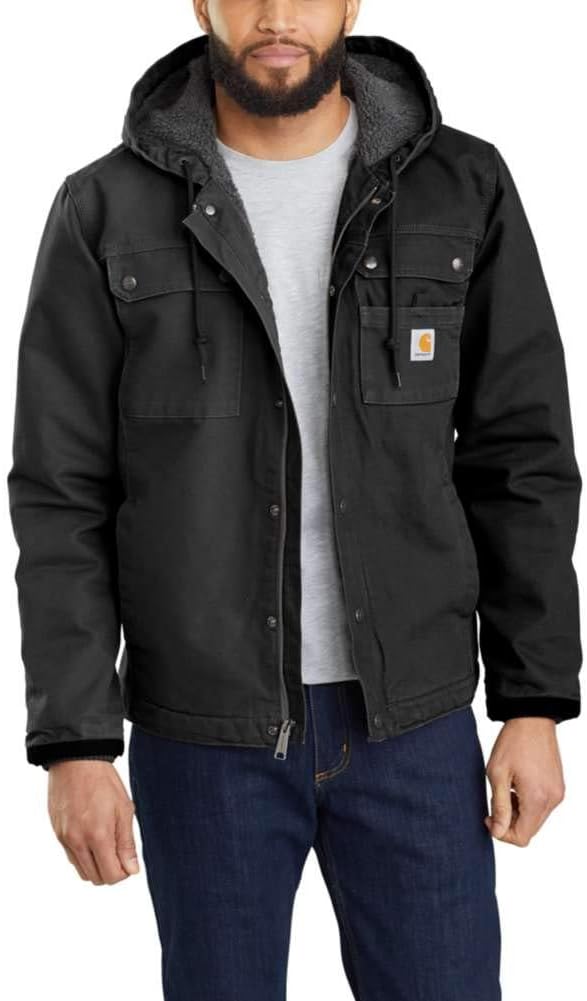
Check price on AmazonThe Active Jac (style J130) is the most casual-leaning of the three. It is still duck canvas, but the cut is slightly more fitted at the hem, the lining is a quilted nylon rather than flannel, and it tends to attract buyers who want the Carhartt durability for everyday wear alongside work use. Field Mag’s “Best Work Jackets” roundup (fieldmag.com) notes the Active Jac as a strong entry point for buyers who are new to the Carhartt duck canvas lineup, citing its warmer static insulation and slightly more modern fit profile.
The quilted nylon lining is the Active Jac’s defining characteristic. It traps more air and provides more loft-based insulation than flannel, making it the warmest of the three jackets when you’re standing still. The tradeoff is breathability: quilted nylon doesn’t wick moisture the way flannel does, and in sustained physical work, heat builds faster.
Carhartt
$149.99
In stock on Amazon
Check price on AmazonThe Sizing Problem (And It’s Real)
Every reviewer keeps surfacing the same issue: all three of these jackets run large, but not in the same way, and the difference matters.
Detroit: Primer Magazine’s Detroit Jacket review (primermagazine.com) flags that the jacket runs generously in both the body and the sleeves. One reviewed owner experience worth noting: a buyer who ordered a Large found the sleeves extremely long and the body baggy even over a sweatshirt, returned it, and found the Medium fit correctly with layering room to spare. That is a full size down on a jacket where you are specifically trying to fit a heavy mid-layer. The Detroit’s cut is a true work cut, designed for an era when sleeves were left long so they could be rolled and the body was generous for freedom of movement. If you are between sizes, size down. If you are shorter-armed, size down regardless.
Bartlett: The Bartlett runs large in the same spirit, but the articulated back panels give it a slightly different feel in motion. Buyers confirm it is generous through the chest and shoulders — which is partly intentional, since the overhead-reach design requires shoulder room to function. Size down here too, but if you are a broader-shouldered buyer who genuinely needs that articulation for work, verify your chest measurement against the current spec chart before dropping a full size, because you do not want to lose the functional benefit by going too tight across the shoulders.
Active Jac: The Active Jac has a noticeably “puffy” quality right out of the bag — the shell and lining have not settled yet, and the jacket reads larger than it will after a few weeks of wear. The consistent owner advice: order one size down and trust that it will break in. Gear Junkie’s “Best Carhartt Jackets” roundup (gearjunkie.com) echoes this sizing-down recommendation specifically for first-time buyers of the Active Jac.
By the Numbers
| Jacket | Canvas Weight | Key Lining | Overhead Articulation | Sizing Tendency |
|---|---|---|---|---|
| Detroit J001 | 12 oz duck | Flannel | No | Runs large — size down 1 |
| Bartlett | 12 oz duck | Flannel/quilted | Yes (back panel) | Runs large — size down 1 |
| Active Jac J130 | 12 oz duck | Quilted nylon | No | Runs very large — size down 1, breaks in |
Warmth: Where These Jackets Actually Separate
Duck canvas itself does not insulate — it blocks wind and resists moisture. The warmth story is entirely in the lining, and this is where the three jackets diverge most clearly.
Detroit’s flannel lining is the most traditional and the most breathable of the three. Flannel wicks better than quilted nylon and does not trap moisture against your body when you are moving hard. Raw static warmth — the kind you feel standing still in a January wind — is modest by comparison to the Active Jac, but the Detroit earns its reputation as a three-season jacket precisely because the flannel breathes through sustained effort. Primer Magazine’s review (primermagazine.com) characterizes it as best used with a mid-layer underneath in genuine cold, which matches the layering-focused cut.
Bartlett’s lining — heavier flannel or light quilted fill depending on production run — splits the difference. Owners rate it warmer than the Detroit in static conditions. More importantly, the articulation means the jacket stays closed at the back when you reach overhead rather than riding up and exposing your lower back to wind. That functional warmth retention across a full work shift matters more than the lining comparison alone suggests.
Active Jac’s quilted nylon lining is the warmest of the three in static conditions. It traps more air, provides more loft-based insulation, and is the right choice if your use case involves standing still in the cold — job-site supervision, driving, outdoor event work, loading dock management. For hard physical work, the breathability deficit becomes a liability. In sustained exertion, quilted nylon can feel clammy in a way flannel does not.
For buyers who run warm, the Detroit is the clear answer. For static cold-weather work, the Active Jac wins on insulation. The Bartlett is the right tool when the job involves overhead reach and you need warmth to hold across a full shift of variable movement.
Construction Quality and Long-Term Value
Carhartt’s core duck canvas construction has remained remarkably consistent. The triple-stitched seams, bar-tacked pockets, and heavy hardware on the Detroit are the same features that built Carhartt’s reputation in the late nineteenth century, as documented in Heddels’ “A Brief History of Carhartt” (heddels.com). The Detroit earns consistent long-term owner praise for the way it breaks in: the canvas softens gradually with washing and wear, the flannel lining develops a familiar texture, and the jacket takes on a personal shape over time. This is the patina effect that workwear collectors and buy-it-for-life buyers specifically seek — the Detroit does not look best in week one, but it looks and feels better in year three than any of the alternatives.
The Bartlett’s overhead articulation is built into the cut itself rather than added as a separate gusset that could degrade. Owners who work overhead consistently report that after a full season, the articulation remains functional and the duck canvas shows appropriate wear without losing structural integrity.
The Active Jac’s quilted nylon lining is the weakest link in long-term durability. Quilted nylon linings can develop cold spots at the stitch lines or lose loft after repeated heavy washing — a known limitation of this construction type that Working Person’s Store (workingpersonstore.com) owner reviews reference when comparing the models over multi-year ownership. This does not make the Active Jac a poor jacket at its price, but if you are doing cost-per-wear math over a decade horizon, the Detroit and Bartlett are the stronger bets.
Frequently Asked Questions
Do Carhartt duck jackets run big, and by how much should I size down?
Yes, all three run large. For the Detroit and Bartlett, sizing down one full size is the consistent recommendation across owner reviews — and the Detroit’s sleeves run particularly long, so shorter-armed buyers should check the sleeve spec before ordering or try in-store. For the Active Jac, size down one full size and expect the jacket to settle and slim slightly with wear. Do not let the fresh-out-of-bag puffiness convince you that you need more room.
What is the warmest Carhartt duck jacket among these three?
The Active Jac, because of its quilted nylon lining — it traps more heat in static conditions. If your use case involves hard physical work, the warmth hierarchy matters less than breathability, and the Detroit’s flannel lining becomes the smarter choice.
Can I fit a hoodie or heavy sweatshirt underneath the Detroit or Bartlett?
Yes. Both jackets are cut to allow layering, which is a core feature of the work-jacket design. Buyers who sized down one full size still report comfortable layering room over a midweight sweatshirt. Sizing down two full sizes will eliminate that room.
Does the duck canvas soften up with wear or stay stiff?
It softens meaningfully. The Detroit in particular earns enthusiastic long-term owner reviews about this quality on Working Person’s Store (workingpersonstore.com). Fresh out of the bag — especially the Active Jac — the fabric feels board-stiff. After a season of real use and washing, it becomes noticeably more pliable. This is not a fast process, and it is precisely what workwear collectors value about the material.
Which model is best for a buyer who runs warm?
The Detroit, without qualification. The flannel lining breathes, the cut allows ventilation at the collar and hem, and the jacket handles three seasons comfortably without overheating on moderate days.
The Decision Rule
Here is the clean version: If you work overhead or on a ladder, get the Bartlett — the back articulation is a genuine functional improvement and the sizing follows the same one-size-down rule as the Detroit. If you run warm or need a workhorse with the best long-term patina and breathability, get the Detroit. If you are doing mostly static work in cold conditions — driving, supervising, outdoor events — and you want maximum warmth from a duck canvas shell, the Active Jac delivers that, with the understanding that you are trading some long-term lining durability for that insulation.
In all three cases: size down one full size, and give the canvas six to eight weeks of real wear before you judge the fit or the feel. Duck canvas does not show its best self on day one.