You just dropped somewhere between $170 and $300 on a pair of logger boots — the tall, stiff-shanked, deep-lugged work boots defined by their underslung heel, typically 1¾ to 2 inches high, designed to grip sloped terrain and ladder rungs — and now you’re wondering whether you bought the right pair. Maybe you’ve been in Chippewas for years and a coworker just showed up in BRUNTs. Maybe you’re outfitting yourself for a new line job and the Thorogood catalog has you second-guessing the order you almost placed. The 8-to-9 inch logger category is crowded with legacy names and a growing set of newer challengers, and the differences between them are real enough to matter over a two- or three-year wear cycle. This article breaks down three specific boots — the Chippewa Super DNA, the Thorogood Logger Series, and the BRUNT DiStasio — using documented owner feedback, published specs, and construction details. By the end, you’ll have a clear decision framework instead of a gut flip.
What You’re Actually Comparing: Construction Baseline First
Before brand loyalties enter the room, it helps to understand what separates a great logger boot from a mediocre one at the construction level. Three markers recur consistently in long-run owner reviews: (1) the welt — specifically whether it’s a Goodyear welt, a stitched-down welt, or a cemented bond; (2) the shank, the rigid spine running beneath the arch that keeps the boot from torquing under load on ladders and uneven ground; and (3) the last shape, the three-dimensional form the upper is built around, which determines fit more than any single spec on a product page.
As Heddels explains in their guide “The Complete Guide to Work Boot Construction,” a Goodyear welt is the construction method that enables resoling — the welt is stitched to both the upper and an insole rib, creating a seam that a cobbler can cut and re-stitch when the outsole wears through. That resoleability is the table-stakes entry point for anyone thinking in cost-per-wear terms. All three boots in this comparison use Goodyear welt construction. What separates them after that is leather quality, fit character, and how the out-of-box experience maps to long-term durability.
Specifications at a Glance
| Boot | Height | Heel | Welt | Insulation | Origin |
|---|---|---|---|---|---|
| Chippewa Super DNA | 9” | Underslung logger | Goodyear | Uninsulated (primary) | USA |
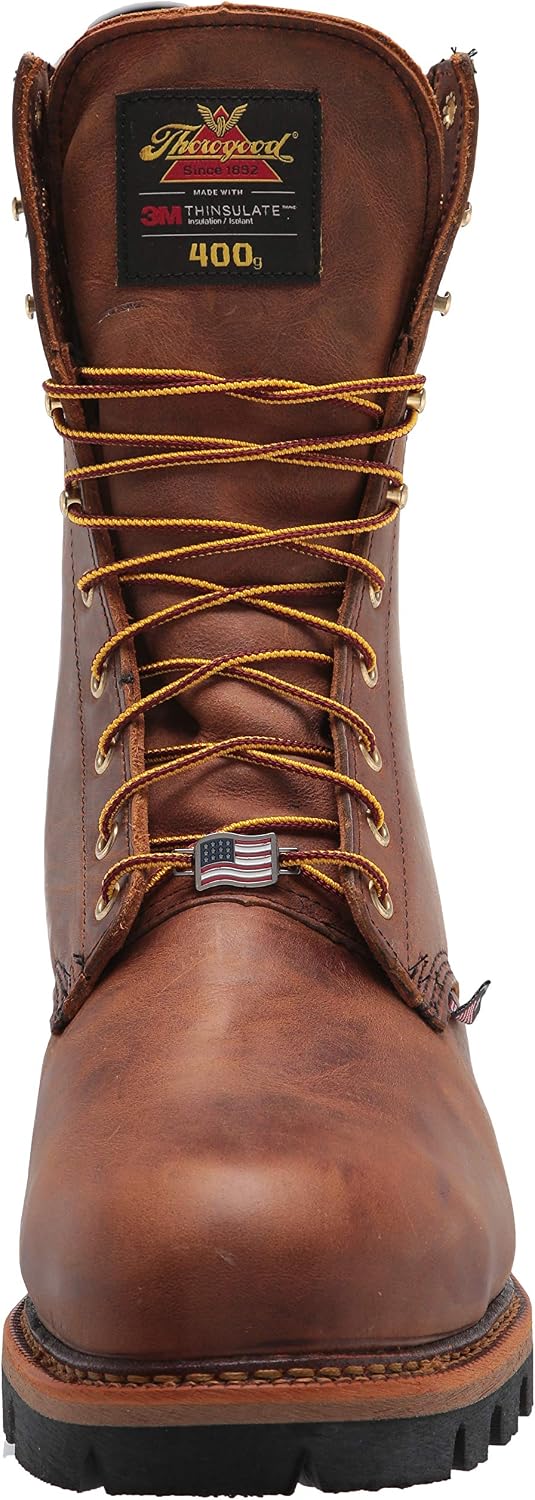
| Thorogood Logger Series | 8” | Underslung logger | Goodyear | 400g Thinsulate option | USA |
| BRUNT DiStasio | 8” | Logger profile | Goodyear | Uninsulated | USA |
The Three Boots, Evaluated
Chippewa Super DNA: The Out-of-Box Comfort Outlier
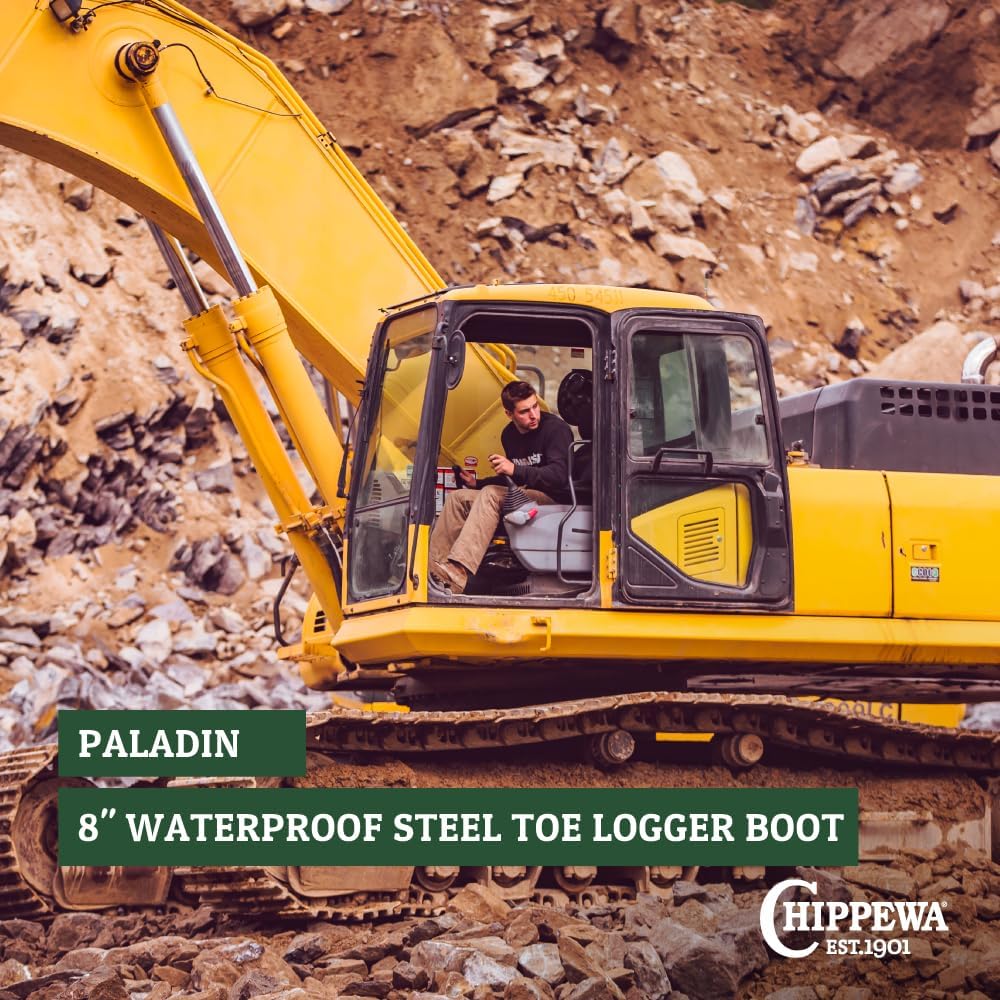
Chippewa has been making boots in the United States since 1901. The Super DNA is their flagship logger — a boot built around a full-grain leather upper, a steel toe option, and a proprietary multi-density midsole and insole combination that Chippewa markets under the “Super DNA” name. The system is engineered to deliver immediate comfort rather than the weeks-long break-in period that older logger patterns were notorious for.
Owner feedback collected in Working Person’s Store’s review archive for the Chippewa Super DNA consistently surfaces the same headline: the out-of-box experience is unusually good for a stiff-category boot. Reviewers describe comfort from the first wear, with specific callouts to arch and back support and secure grip on wet or sloped terrain. That’s not a universal experience with any logger boot, so it’s worth weighting heavily.
The durability story is equally instructive. A documented second-pair owner in the Working Person’s Store review archive for the Super DNA notes that their first pair held up through daily exposure to oil and fuel for over two years before cracking appeared behind the steel toe. Two-plus years of daily hard use in a petroleum-heavy environment before structural failure is a respectable performance curve. With regular conditioning and a proactive resole before the welt fails — a process Heddels’ work boot construction guide describes as standard maintenance for any Goodyear-welted boot — the cost-per-wear math extends meaningfully beyond that baseline.
The asterisk on the Chippewa line is one that heritage buyers already know: not every Chippewa boot is made in the United States. Working Person’s Store’s review archive for the Chippewa Classic Soft Toe shows one-star reviews triggered specifically by the “Made in China” label — a brand-perception problem Chippewa created by extending their nameplate onto imported product. The Super DNA is documented as a USA-made boot, but if country of origin is a non-negotiable for you, verify the specific SKU before ordering.
Chippewa
$247.96
In stock on Amazon
Check price on AmazonThorogood Logger Series: The Loyalist Switcher’s Honest Report
Thorogood, manufactured by Weinbrenner Shoe Company in Wisconsin, occupies the heritage-American-made quadrant of the market alongside Chippewa and White’s. Their Logger Series is a direct competitor to the Super DNA, sharing Goodyear welt construction and domestic manufacturing credentials, but with a different last shape and a notably different break-in character.
The most valuable piece of owner documentation for this category comes from a reviewer in Working Person’s Store’s review archive for the Thorogood Logger who explicitly notes switching from lifelong Chippewa loyalty. The assessment is cautiously positive: the boot requires a break-in period of a few wearings before it conforms — honest rather than alarming. As Heddels notes in “The Complete Guide to Work Boot Construction,” a short break-in period is standard for full-grain leather boots in stiff categories and indicates the leather is genuine and dense rather than softened with fillers. A few wearings is within the normal range; concern would arise only if reviewers described weeks of pain.
The Thorogood Logger is also available in a 400-gram Thinsulate-insulated version. Gear Junkie’s “Best Work Boots for Tradespeople, 2025 Edition” positions 400g Thinsulate as a cold-weather-specific specification — appropriate below freezing in relatively static conditions, but likely to cause overheating when you’re generating significant body heat through active work in moderate temperatures. If you’re buying for shoulder-season or year-round use, the uninsulated version is the more versatile choice. The insulated version is a purpose-built cold-climate tool.
Thorogood’s manufacturing provenance is also cleaner to verify than Chippewa’s. The brand has not extended its nameplate to imported product lines, which eliminates the SKU-by-SKU due diligence problem that complicates Chippewa purchases. For buyers who want the domestic-made story without uncertainty, Thorogood presents a more consistent picture.
Chippewa
$247.96
In stock on Amazon
Check price on AmazonBRUNT DiStasio: The New-Blood Option and Its Polarization Problem
BRUNT Workwear entered the market in 2020 with a direct-to-consumer model and a stated mission to offer tradespeople better-fitting, better-supported work boots at competitive price points. Their Marin work boot developed a loyal following on job sites. The DiStasio is BRUNT’s foray into the logger category — an 8-inch, Goodyear-welted boot targeting the same lineman and outdoor worker segment as the Chippewa and Thorogood loggers.
The DiStasio has the most polarized owner feedback of the three boots in this comparison, and understanding the shape of that polarization is more useful than averaging the scores. On one end of the spectrum, BRUNT’s DiStasio review archive documents a pole climber’s spouse reporting that the boot is “the most comfortable work boot in 20 years” of trade use — a strong endorsement from a population that is notoriously hard on footwear and very specific about what they need. On the other end, a reviewer who loved the BRUNT Marin and expected the DiStasio to carry over that fit character found instead that the logger platform feels completely different — different last shape, different break-in character, different arch positioning — and ultimately unsatisfying.
That second data point is the more important one for decision-making purposes. The Marin and the DiStasio are not the same boot in different heights. The logger category requires a different last geometry to accommodate the heel stack and shank positioning, and BRUNT made different choices in that geometry than they did for the Marin. Some feet will love those choices; others will not. If your positive BRUNT experience is based on the Marin, do not assume the DiStasio will translate.
For pole climbers and linemen specifically, the DiStasio represents a legitimate option worth trying if you can access a return window. BRUNT’s direct-to-consumer model means the company has strong structural incentives to make the return and exchange process functional, which lowers the risk of a trial purchase.
Thorogood
$319.95
In stock on Amazon
Check price on AmazonThe Decision Framework: If X, Then Y
If you’ve read this far, here’s the honest summary of where each boot wins:
If out-of-box comfort is your primary requirement — particularly if you need to be productive from day one without a break-in grace period — the Chippewa Super DNA has a documented edge. The comfort system works as advertised, and the durability ceiling on daily hard use is over two years in petroleum-heavy environments before structural issues emerge, based on Working Person’s Store review documentation. Condition the leather and resole before failure, and the cost-per-wear math extends significantly.
If you want domestic manufacture with a clean, verifiable brand provenance story — and you’re comfortable with a short break-in period — Thorogood is the stronger choice. Their logger construction is sound, their sizing consistency is well-documented in Working Person’s Store’s review archive, and the brand has not complicated its identity with imported product lines carrying the same nameplate. The insulated version is a cold-weather-specific tool per Gear Junkie’s 2025 work boot roundup; buy the uninsulated version for year-round versatility.
If you’re a pole climber or lineman who has struggled to find a logger that fits your specific biomechanical requirements, and you’re willing to accept that the DiStasio may or may not work for your foot shape — BRUNT is worth the risk if you have a return window. The niche endorsements documented in BRUNT’s own review archive are credible, but so is the warning from former Marin loyalists: the DiStasio is not the Marin in a taller form factor.
If you’re outfitting a crew and need a consistent, predictable spec across multiple sizes — buy the Thorogood. If you’re outfitting yourself and can afford to experiment with one return — the DiStasio might be the boot that surprises you. If you want the most documented out-of-box comfort and a proven durability floor — start with the Super DNA, verify the USA-made origin on the specific SKU, and put the leather on a maintenance schedule from day one.
Frequently Asked Questions
Are Chippewa logger boots still made in the USA? Some are, some aren’t. The Super DNA logger is documented as USA-made, but Chippewa has extended their brand to imported product lines — Working Person’s Store’s review archive for the Classic Soft Toe shows complaints specifically citing the “Made in China” label. Verify the country of origin on the specific model and SKU before purchasing. Do not assume the Chippewa name guarantees domestic manufacture.
How much break-in time do Thorogood logger boots require? Owner documentation in Working Person’s Store’s review archive suggests a few wearings rather than weeks. One reviewer who switched from Chippewa describes the break-in as present but manageable. Heddels’ “The Complete Guide to Work Boot Construction” notes this is typical for stiff-category Goodyear-welted boots in full-grain leather. Standard protocol: wear them for shorter sessions before committing to a full workday, and use a leather conditioner to accelerate the softening process.
Is the BRUNT DiStasio a good choice for pole climbers and linemen? The available owner evidence in BRUNT’s DiStasio review archive suggests it can be — a documented reviewer from exactly that use case describes it as the best work boot worn in 20 years of trade use. But the DiStasio’s fit geometry does not suit every foot, and those endorsements sit alongside polarized negative reviews. Fit verification before committing to a non-returnable purchase is important.
How long do Chippewa Super DNA logger boots last with daily hard use? A second-pair owner in Working Person’s Store’s review archive documented leather surviving daily oil and fuel exposure for over two years before cracking appeared behind the steel toe. That represents a realistic durability ceiling for extreme-condition daily use. With regular conditioning and a proactive resole — a process Heddels describes as standard Goodyear-welt maintenance — the lifespan extends meaningfully beyond that baseline.
Does the 400g Thinsulate insulation in the Thorogood Logger make the boot too hot for three-season use? In active work conditions, generally yes. Gear Junkie’s “Best Work Boots for Tradespeople, 2025 Edition” positions 400g Thinsulate as a below-freezing specification. When you’re generating body heat through active work, 400g is typically too warm for moderate temperatures. Buy the uninsulated Thorogood Logger if you need shoulder-season or year-round capability.
If I love the BRUNT Marin, will the DiStasio logger feel the same? No, and this is explicitly documented in BRUNT’s DiStasio review archive. The DiStasio uses a different last shape optimized for the logger category’s geometry, and at least one former Marin loyalist found the fit character completely different and unsatisfying. Treat the DiStasio as a separate evaluation rather than an assumed continuation of the Marin experience.