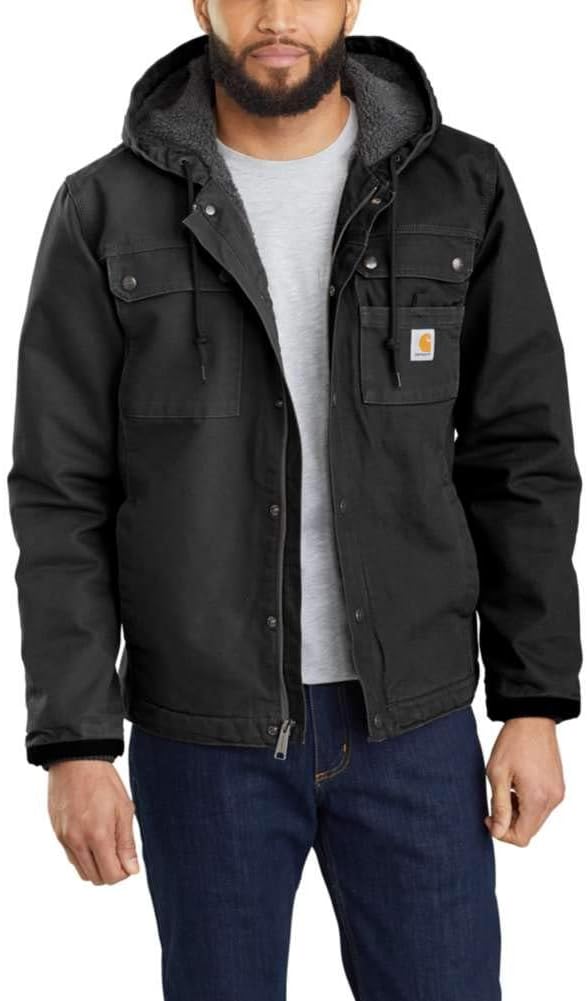
You’re standing in a parking lot at 6 a.m., debating whether to grab a hoodie before the shift starts. It’s 38°F. The duck canvas jacket you bought last month feels right — but you’re not sure if it’ll hold when the temperature drops another fifteen degrees by lunch, or whether you’ve already pushed it past its comfort range. That uncertainty is exactly what this article is designed to resolve.
Duck canvas, for anyone newer to workwear, is a tightly woven cotton fabric — “duck” refers to the weave density, not the bird — that’s been the backbone of American work jackets since the nineteenth century. It blocks wind, resists abrasion, and gets better with age as the fibers soften and tighten. But canvas alone doesn’t provide meaningful warmth. The lining — whether that’s a blanket-style wool blend, a fleece backer, or a quilted synthetic fill — is what determines real-world temperature range. And that range varies dramatically between models that look nearly identical on a rack. This guide breaks down what owners actually report across four duck canvas jackets — the Berne Heritage Hooded, the DRI DUCK Cheyenne, the Carhartt Bartlett, and the Carhartt Detroit J01 — so you can match a jacket to your conditions before you buy.
The Temperature Reality Check: What Owners Are Actually Reporting
The workwear community is unusually honest about warmth performance, partly because the stakes are real — a cold lineman is a distracted lineman. Across aggregated reviews at Working Person’s Store and in long-run owner commentary surveyed by Gear Junkie, a consistent pattern emerges: blanket-lined duck jackets (those with a heavy woven fleece or wool-blend interior) run significantly warmer than quilted or plain-fleece-lined alternatives, and that gap matters most in the 20°F–40°F window where most outdoor workers operate.
By the numbers — owner-reported comfortable low temperatures by lining type:
| Jacket | Lining Type | Owner Low (°F) | Notable Caveat |
|---|---|---|---|
| Berne Heritage Hooded | Blanket-weight fleece | ~15–20°F | Multiple owners report no mid-layer needed |
| DRI DUCK Cheyenne | Blanket lining | ~25–30°F | Cuffs run tight until broken in |
| Carhartt Bartlett | Washed fleece | ~30–35°F | Immediate comfort; washed-in feel from day one |
| Carhartt Detroit J01 | Quilted flannel | ~35–40°F | Designed for layering, not standalone cold |
These aren’t lab ratings. Manufacturer spec sheets don’t publish temperature ranges for work jackets the way sleeping bag brands do. These numbers are distilled from owner consensus — treat them as field data with a margin of ±10°F based on body type, activity level, and wind exposure.
The Berne Heritage Hooded: The Surprise Overperformer
If you’ve priced the Berne Heritage Hooded against a Carhartt blanket-lined duck jacket and assumed you’d be giving something up, the owner record says otherwise. The most emphatic data points in any duck canvas jacket review category come from Berne Heritage owners, and they keep saying the same thing: this jacket is warmer per dollar than anything else in the category.
One owner at 5’5” reported wearing it through blizzard conditions without a base layer underneath — an extraordinary claim, but one corroborated by multiple reviewers describing it as “legitimately warm to the bone” in conditions where most single-layer jackets fail. On the sizing end, an owner at 6’5” confirmed that the XL Tall fits true to purpose, which matters because blanket-lined jackets can run proportionally short in the torso on taller frames, breaking the seal at the waist where cold air gets in.
Field Mag’s heritage workwear coverage notes that Berne — a brand that doesn’t get the Carhartt-level editorial attention — has maintained domestic and nearshore manufacturing standards that keep their blanket-lining weights honest. The insulation punch isn’t a marketing claim; it’s a function of the lining’s GSM (grams per square meter, a measure of fabric density) running heavier than comparably-priced competitors. The sizing generosity is a feature, not an accident: Berne cuts their Heritage line for working bodies that may be layering underneath or need range of motion across the shoulders.
The tradeoff: Berne’s retail footprint is smaller, so fit verification before buying requires more planning. The shell also doesn’t carry the same heritage cachet as Carhartt’s Detroit-era branding, which matters to some buyers.
DRI DUCK Cheyenne: The Carhartt Challenger With One Asterisk
Owners who’ve worn both the DRI DUCK Cheyenne and a Carhartt blanket-lined duck jacket frequently describe the Cheyenne as warmer and approximately $30 cheaper — a combination that, in a workwear budget, is meaningful. Working Person’s Store’s aggregated reviews show a consistent theme: buyers who switched from Carhartt report no warmth downgrade and a modest cost savings, with the blanket lining described as “dense” and “substantial” rather than the thinner fleece they expected at the price point.
The asterisk is the cuffs. Multiple owners flag that Cheyenne’s cuffs run tight on arrival, particularly for anyone with larger wrists or who wears gloves inside the sleeve. This isn’t a defect — it’s a construction choice that pays off over time, since the cuffs seal out wind effectively once broken in — but it’s a real friction point in the first two weeks. The break-in arc for the Cheyenne’s cuffs is similar to a new boot heel: uncomfortable and then exactly right.
Popular Mechanics’ coverage of best work jackets highlights DRI DUCK as a brand that benchmarks directly against Carhartt in construction spec — same weight canvas, comparable stitching density — at a lower price point achieved through leaner marketing spend rather than material compromise. That framing matches what owners report: the Cheyenne doesn’t feel cheap; it feels utilitarian in the way that Carhartt felt before Carhartt became a lifestyle brand.
The tradeoff: Longevity data on the Cheyenne doesn’t run as deep as Carhartt’s, simply because the brand hasn’t been in owners’ hands as long at scale. Buyers optimizing for a decade-plus lifespan and a known repair ecosystem should weigh that honestly.
Carhartt Bartlett vs. Carhartt Detroit J01: Two Philosophies, One Brand
Carhartt’s duck canvas jacket lineup contains an internal contradiction that trips up buyers: the Bartlett and the Detroit J01 look like variations on the same product but are built around different operating assumptions. Understanding that distinction prevents an expensive mismatch.
The Bartlett arrives washed. That’s not a flaw — it’s deliberate. Carhartt pre-washes the Bartlett’s shell to deliver immediate softness, and owners describe it as “a jacket that already has stories to tell,” broken in from the first wear. The warmth profile is solid in the 30–35°F range with its fleece lining, and the fit runs closer to body than most duck jackets, which means it reads well over a single mid-layer but doesn’t invite heavy stacking underneath.
The Detroit J01 is the opposite philosophy. It ships stiff, cuts oversized by design, and multiple owners explicitly flag that the extra room is intentional — the J01 is engineered to accommodate a heavy hoodie, a fleece vest, or a thick knit underneath without restricting shoulder movement. The quilted flannel lining on the J01 is lighter than the Bartlett’s fleece, which is counterintuitive until you understand that the J01’s warmth equation assumes you’re filling that extra volume with an insulating mid-layer. Standalone, it runs cold. Layered, it becomes a system.
Popular Mechanics’ breakdown of the Carhartt lineup confirms this read: the J01 is a “layering shell” in workwear parlance, not a standalone cold-weather jacket. Buyers who’ve purchased the J01 expecting Bartlett-level standalone warmth and been disappointed are usually buyers who missed that design intent.
Decision rule:
- If you want to grab and go in 30–40°F weather with nothing underneath, buy the Bartlett.
- If you work in variable conditions and want to control your warmth stack actively, buy the J01 and plan for a mid-layer.
The Dickies Fleece-Lined Duck: The Widest Temperature Swing on Record
No owner data point in this category is more striking than a single Dickies duck fleece-lined jacket review that surfaces consistently in aggregated workwear commentary: an owner driving at speed in a vehicle with windows down in 20°F conditions reported no cold penetration. The same owner reported wearing the jacket comfortably at 70°F — the widest temperature swing documented in any review in this segment.
That range suggests the Dickies fleece lining achieves something that heavier blanket linings often don’t: breathability sufficient to prevent overheating at moderate temperatures. Blanket-lined jackets are warmer at the cold end but can become clammy in the 50–65°F range during active work. The Dickies duck fleece-lined jacket appears to hit a functional middle band — warm enough for hard cold, breathable enough that it doesn’t become a liability as the day warms.
The tradeoff: At the low end, it doesn’t match the Berne Heritage Hooded below about 25°F. If your conditions regularly drop to single digits or you’re working stationary in deep cold, the Dickies isn’t the ceiling you need. But if your workday spans a temperature swing of 40+ degrees — cold morning, warm afternoon, outdoor-to-indoor-to-outdoor cycling — the Dickies duck fleece-lined jacket’s versatility is a genuine differentiator.
Frequently Asked Questions
What temperature is a blanket-lined duck canvas jacket actually good to? Based on owner consensus across the Berne Heritage Hooded and DRI DUCK Cheyenne, a quality blanket-lined duck jacket is reliable to approximately 20–25°F with moderate activity. Below that, or in wind-exposed conditions, most owners add a base layer. Stationary workers in deep cold should plan for a heavier system regardless of lining type.
Can I fit a hoodie under the Carhartt Bartlett without sizing up? The Bartlett’s closer cut makes this tight. Owners with average builds report fitting a lightweight hoodie without sizing up, but a heavy pullover hoodie typically requires going one size larger. If layering is your plan, the Detroit J01 is the Carhartt model explicitly cut for it.
Is the Berne Heritage jacket as warm as a Carhartt for the same conditions? Owner reports consistently say yes — and several say the Berne runs warmer at comparable price points. The Berne Heritage Hooded’s blanket lining appears to run heavier than Carhartt’s equivalent tier, and the sizing generosity means less cold air infiltration at the waist and cuffs.
Does the DRI DUCK Cheyenne hold up as long as Carhartt in daily work use? Longevity data on the Cheyenne is less extensive than Carhartt’s, which has decades of documented wear in the field. Owner reviews through two to three seasons are uniformly positive on durability, but buyers making a decade-horizon purchase decision should weigh that the repair and resole ecosystem (where it exists for jackets) is better documented for Carhartt. The Cheyenne is a strong value play; it’s not yet a proven heirloom.
How do duck canvas jackets wash — do they shrink or lose water resistance? Heddels’ workwear glossary notes that raw duck canvas can shrink 3–5% in the first wash. Pre-washed models like the Carhartt Bartlett have already taken that shrinkage, making them more dimensionally stable. DWR (durable water repellent) finishes on canvas do degrade with repeated washing; a spray-on DWR refresher after washing restores the water-shedding behavior without affecting breathability.
Which Carhartt duck jacket is actually designed for layering underneath? The Detroit J01. It ships stiff and oversized by design. Multiple owners and Popular Mechanics’ Carhartt jacket review both confirm the J01’s cut anticipates a mid-layer. The Bartlett is the ready-to-wear, standalone-warmth option in the same family.
Sources consulted: Heddels, “The Workwear Glossary: Duck Canvas, Tin Cloth, and Waxed Cotton Explained”; Gear Junkie, “Best Work Jackets”; Working Person’s Store customer review aggregations for Carhartt, Berne, and DRI DUCK; Popular Mechanics, “Best Carhartt Jackets of 2025”; Field Mag, “Heritage Workwear Buying Guide.”