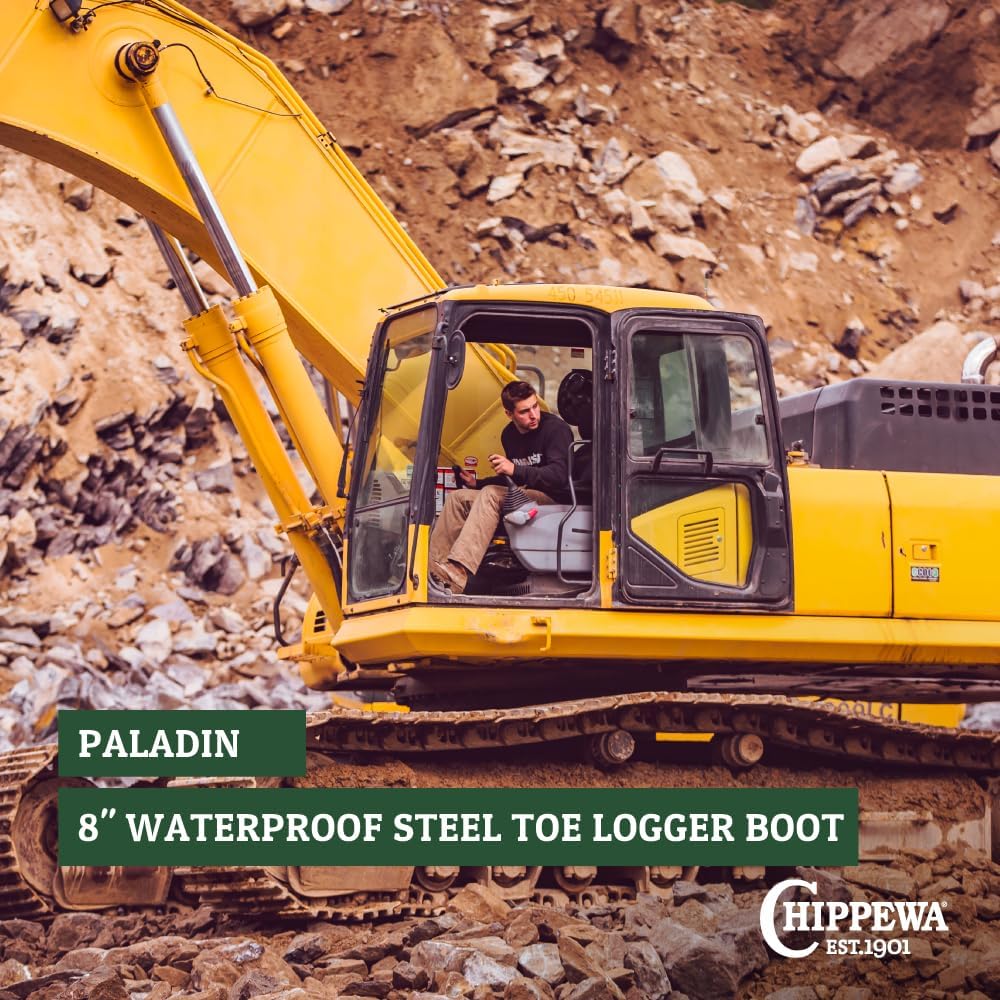
You just dropped $250 on a pair of logger boots and six months later you’re staring at a hole in the leather above the toe box, wondering if the brand you trusted is going to back the repair or leave you sourcing a replacement mid-season. Logger boots — the tall, heavily constructed work boots built with a raised heel designed to grip bark and uneven ground, a shank (a stiff internal support that runs along the arch), and leather uppers built to take daily punishment — are a serious capital investment for anyone who works on their feet outdoors. Whether you’re falling timber, running electrical line, fighting fire, or working construction in wet Pacific Northwest winters, the boot you pick has a direct effect on your foot health, your safety, and your wallet over a two-to-five year horizon. This guide pulls together what long-term owners actually report after a year or more of hard use — the failure modes, the fit surprises, and the brands that earned repeat purchases — so you can make a smarter call before you buy.
| EDITOR'S PICKChippewa Men's 8" Lace-To-Toe W… | Mid-tierGeorgia Boot Steel Toe GORE-TEX… | Budget pickIrish Setter | |
|---|---|---|---|
| Height | 8" | — | 8" |
| Insulation | Non insulated | 400G | — |
| Membrane | — | GORE-TEX | — |
| Lace style | Lace-to-toe | — | — |
| Price | $247.96 | $212.96 | $151.96 |
| See on Amazon → | See on Amazon → | See on Amazon → |
The Failure Mode Map: What Actually Breaks and When
Before we go brand by brand, it’s worth naming the failure modes that show up across the category. Owner reports aggregated across retail and forum sources — including Working Person’s Store’s logger boot category and long-run review threads tracked by Heddels’s heritage workwear brand quality tracker — cluster around three recurring problems:
1. Leather creasing and cracking above the toe box. This is the single most reported failure mode in logger boots, particularly in boots with a padded collar or reinforced piece just above the steel toe. The leather flexes at that crease point thousands of times a day and, if the leather quality or finishing is thin, it splits open — usually between six months and two years in, depending on use intensity.
2. Waterproofing membrane failure. Gore-Tex and proprietary waterproofing liners can delaminate or lose effectiveness where the upper flexes repeatedly, typically at the forefoot bend. Owners who work in standing water or wet clay are the first to notice.
3. Outsole separation and heel block wear. Logger heels are higher and more aggressive than flat-soled work boots. The heel block takes asymmetric stress, and cheaper cemented constructions (glued, not stitched) can separate at the rand line within a year on hard terrain.
The brands most prone to accelerated leather cracking, per aggregated owner reports, tend to be those using corrected-grain leather (buffed and coated to hide surface imperfections) rather than full-grain leather (the intact outer layer of the hide, naturally denser and more durable). This distinction matters more than price tier alone.
Brand-by-Brand: What a Year of Hard Use Reveals
Carhartt 8-Inch Logger
The Carhartt logger is widely purchased by crews outfitting at volume — it hits an accessible price point and carries brand recognition that shortcuts the approval process on a job site. But the long-run owner picture is more cautionary.
The most specific failure report in the owner dataset describes a leather hole appearing approximately one inch above the steel toe cap, at the crease line of the padded piece above the heel. The reviewer wore the boot until full replacement was required rather than spot-repair being viable. This is a textbook corrected-grain crease failure at an anatomically predictable stress point. For forestry or logging work — where boots flex continuously on uneven ground — this failure arrives faster than it would on flat concrete.
The honest tradeoff: If you’re outfitting a crew for a short-duration project or need a budget-accessible boot for occasional outdoor work, the Carhartt logger is serviceable. If you’re putting these on every working day in rough terrain, the cost-per-wear math likely inverts by year two.
Georgia Boot Gore-Tex Logger
This is the standout loyalty story in the dataset. One owner reports purchasing more than 40 pairs over many years — an extreme data point, but meaningful precisely because it’s a single buyer making a repeated, deliberate choice based on consistent outcomes. The cited reasons: consistent waterproofing performance and positive long-term foot health outcomes.
For a Gore-Tex liner to hold up across that many purchase cycles and years of use, the construction surrounding the membrane has to be sound — the liner needs a stable upper to bond to, or it delaminates prematurely. The Georgia Gore-Tex logger’s upper construction has apparently passed that test across a long career of hard use.
Outside Online’s 2024 work boot feature notes that Gore-Tex liners in boots constructed with a lasting board (a rigid insole foundation) tend to hold their waterproofing geometry longer than those in softer, more flexible constructions — the liner has less opportunity to fold and crack.
The honest tradeoff: You are paying a premium for the membrane. If your work is wet-cold rather than just wet, and foot health is a priority over raw cost, the Georgia Gore-Tex has a documented track record that most brands in this category cannot match.
Chippewa Super DNA Logger
Chippewa’s Super DNA draws one of the more compelling chemical-resistance reports in the owner dataset. A reviewer who works daily in environments with oil and fuel exposure — a condition that degrades most leather treatments rapidly — reports more than two years of service before leather cracking became an issue, explicitly contrasting the Chippewa’s durability with competing brands that failed faster under the same conditions.
This matters because oil and hydrocarbon exposure is one of the fastest ways to degrade a leather boot’s fiber structure. The fact that the Chippewa Super DNA held up in that environment for two-plus years suggests either above-average leather quality, an effective factory treatment, or both.
Per Popular Mechanics’ work boot buyer’s guide, Chippewa’s domestic production lines — particularly boots sourced from their Wisconsin manufacturing — have historically used heavier leather weights than many import-finished competitors. Whether the Super DNA falls under that umbrella is worth confirming with Chippewa directly before purchase.
The honest tradeoff: Strong evidence for chemical-environment durability. Less reviewed for extreme cold or alpine-wet conditions — the dataset skews toward industrial and fuel-adjacent work.
Irish Setter Mesabi Logger
The most niche — and in some ways most credible — endorsement in the dataset comes from a pole climber. Pole climbers use gaffs (sharp spurs) strapped to their boots to climb wooden utility poles, which creates lateral stress and torsional force that flat-ground workers never experience. The fact that a pole climber specifically calls out the Irish Setter Mesabi as their boot of choice is a high-stakes endorsement: in that application, boot failure is a safety event, not just an inconvenience.
Heddels’s heritage brand tracker notes that Irish Setter, as a Red Wing subsidiary, benefits from Red Wing’s leather sourcing and quality-control infrastructure — a relevant data point given that Irish Setter boots are positioned at a lower price tier than Red Wing’s flagship lines.
The honest tradeoff: Proven in one of the most demanding logger-adjacent applications available. Less owner data on pure forestry use or extended waterproofing over years.
Ariat Logger
Ariat’s waterproofing claim gets a specific stress test in the owner dataset: a reviewer operating a 2,000 GPM fire pump — generating substantial water exposure — reports confirmed waterproofing performance. This is not the same as standing in a puddle; a 2,000 GPM pump creates mist, splash, and sustained wet-contact conditions that expose every seam and welt in the boot.
Passing that test is meaningful. Ariat’s logger line has historically been positioned toward agricultural and ranch use, but this kind of owner report suggests real crossover into firefighting-adjacent work environments.
The honest tradeoff: Strong wet-environment evidence. Ariat’s Goodyear welt construction (a stitched attachment method that allows resoling — see section below) on their logger line makes them a more viable long-term investment than cemented alternatives.
BRUNT DiStasio Logger
BRUNT is a newer entrant in the work boot category, built on direct-to-tradesperson marketing and a moc-toe wedge boot (the Marin) that earned genuine loyalty in its core audience. The DiStasio is BRUNT’s logger offering — and here the owner data is cautionary.
A reviewer with more than 20 years of Carolina logger experience who also owns the BRUNT Marin reports that the DiStasio’s fit profile is completely different from the Marin — different enough that existing BRUNT customers should not assume size parity. The 20-year Carolina logger benchmark is significant context: this is a buyer with a calibrated sense of what a logger should feel like, and the DiStasio didn’t match expectations set by either BRUNT’s own wedge or their prior logger experience.
The honest tradeoff: BRUNT’s customer service and warranty reputation are solid. But if you’re sizing based on your Marin fit or assuming brand-internal consistency, you may be in for a surprise. Order with a return window confirmed.
Thorogood and Timberland PRO
Both brands appear in the logger category with established owner bases. Thorogood’s logger line benefits from the same Goodyear welt resoling ecosystem as their moc-toe and union-made lines — a meaningful long-run value factor. Timberland PRO’s Anti-Fatigue technology gets consistent mention from owners who work long shifts on hard ground. Neither brand generates the extreme loyalty or failure-mode specificity of the Georgia or Chippewa data above, which itself is useful signal: they perform predictably in the middle of the pack.
By the Numbers
| Brand | Documented Failure Mode | Resole-Eligible (Goodyear Welt) | Standout Owner Use Case |
|---|---|---|---|
| Carhartt | Leather crack above steel toe, <2 yr | Varies by model | Volume crew purchase |
| Georgia Boot | Minimal per 40+ pair buyer | Varies by model | Sustained wet-cold work |
| Chippewa Super DNA | 2+ yr before cracking in oil/fuel | Yes (select models) | Chemical/fuel environments |
| Irish Setter Mesabi | Not reported at scale | Yes (RW ecosystem) | Pole climbing / line work |
| Ariat | Not reported at scale | Yes (select models) | Fire/pump environments |
| BRUNT DiStasio | Fit inconsistency vs. brand lineup | Confirm per model | Newer entrant, limited data |
Resoling, Long-Term Value, and the Cost-Per-Wear Calculus
Gear Junkie’s work boot durability and resoling guide makes the case plainly: a $300 Goodyear-welted logger that takes two resoles over eight years costs less per year than a $180 cemented boot replaced every two years. The math only works if the upper leather survives long enough to justify the resole — which is why leather quality, not just construction method, is the deciding variable.
Brands with confirmed Goodyear welt construction in their logger lines — Thorogood, Chippewa (select models), Ariat (select models), and Irish Setter via the Red Wing resoling network — give you the option to extend boot life well past the initial upper investment. Carhartt and BRUNT logger models should be confirmed before purchase, as construction method varies across their lineups.
Frequently Asked Questions
What is the most common failure mode in logger boots and which brands are most prone to it? Leather cracking above the toe box — specifically at the crease point of the padded piece just above the steel cap — is the most consistently reported failure. Carhartt’s 8-inch logger generates the most specific owner documentation of this failure, with at least one reviewer wearing through to full replacement at that exact location.
Does the Carhartt 8-inch logger hold up for forestry work or does the leather crack prematurely? Owner reports suggest the leather cracking above the toe occurs within the first two years under hard daily use. For occasional wear or flat-ground work, the boot is serviceable. For full-season forestry work on uneven terrain, the failure arrives faster than the price point might suggest is acceptable.
Is the Georgia Boot Gore-Tex logger actually waterproof after years of hard daily use? The most extreme long-term data point in the owner dataset — a buyer with 40-plus pairs purchased over many years — cites consistent waterproofing as the primary reason for that loyalty. That’s a stronger sustained track record than any competing brand in this guide can match from the available data.
How does the BRUNT DiStasio logger fit compared to the BRUNT Marin wedge boot? Per a reviewer who owns both and brings 20-plus years of Carolina logger experience as a reference: the fit is completely different. Do not assume size or fit parity between BRUNT’s moc-toe wedge and their logger. Confirm return eligibility before ordering.
Which logger boot brands are still resoleable and worth the long-term investment? Thorogood, Chippewa (select models), Ariat (select models), and Irish Setter — via the Red Wing resoling network — are the clearest bets for resole-eligible construction. Confirm the specific model’s welt construction before purchase; not every boot in a brand’s line uses the same method.
What insulation level do owners recommend for working in wet cold environments below freezing? Owner reports across the category consistently favor 400g insulation as the threshold for sustained below-freezing work in wet conditions. Lighter insulation (200g or uninsulated) performs adequately in cold-dry conditions but loses effectiveness when the foot is wet. For work that involves standing water in sub-freezing temps, 400g paired with a Gore-Tex membrane — as in the Georgia Boot line — is the configuration most often cited as adequate rather than marginal.
The Decision Rule
If you work daily in wet-cold conditions and foot health is a career-length concern: Georgia Boot Gore-Tex logger has the deepest sustained owner loyalty in this dataset.
If you work around oil, fuel, or chemical exposure: Chippewa Super DNA has the most specific documented durability evidence for that environment.
If you climb poles or work line: Irish Setter Mesabi has the highest-stakes endorsement in the dataset.
If you operate in sustained water exposure — firefighting-adjacent, pump work, high-volume irrigation: Ariat’s waterproofing construction has been stress-tested in the field and confirmed.
If you’re outfitting yourself for the first time and want a known-resole ecosystem: Thorogood offers the clearest path to long-term cost-per-wear value with a well-documented resoling network.
If you’re eyeing the BRUNT DiStasio as a logger extension of your Marin loyalty: size carefully, buy with a return window, and treat it as an independent fit evaluation — not an extension of your existing BRUNT sizing.