You just spent two weeks reading boot forums at midnight, trying to decide whether to pull the trigger on a $198 Thursday Boot Captain or stretch another hundred-plus dollars toward something with more pedigree. The Captain keeps showing up in “best boots under $200” roundups. It’s a Goodyear-welted boot — meaning the sole is stitched to the upper in a way that allows future resoling, extending the boot’s life well beyond what you’d get from a glued construction — and it’s made from full-grain leather, which is the top layer of the hide and the most durable cut. On paper, it sounds like a heritage boot at an accessible price. But paper and pavement are different things, and the $200 crossroads is exactly where marketing tends to outrun construction reality.
This guide is for buyers who already understand why a resoleable boot is worth paying for, and who are now trying to figure out whether the Captain is the smart move or whether another hundred dollars — or two — buys meaningfully more boot. We’ll name the tradeoffs, show the math, and give you a clear decision framework at the end.
What the Thursday Boot Captain Actually Is
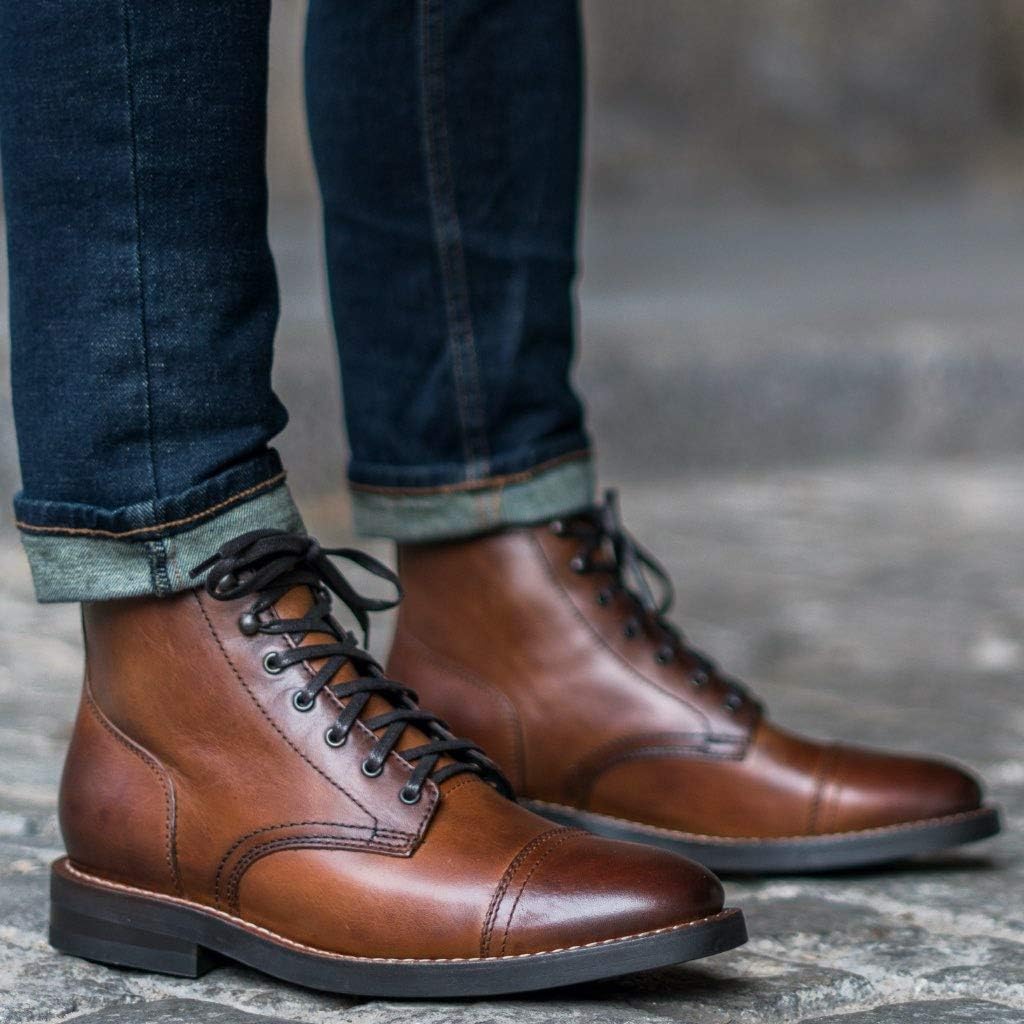
Thursday Boot Company launched in 2014 with a direct-to-consumer model and a clear pitch: cut out the retail middleman, put the savings into materials, and sell a Goodyear-welted dress-work boot at a price that used to be impossible. The Captain is their flagship — a Chelsea-adjacent lace-up silhouette available in multiple leathers, riding on a Blake-stitched midsole and a Goodyear welt finish.
Wait — Blake-stitched and Goodyear welted? That’s the first nuance to understand. A true Goodyear welt involves a strip of leather (the welt) that’s stitched to both the upper and the insole, then stitched again to the outsole. It creates a durable, water-resistant bond and, crucially, makes resoling straightforward. Blake stitching goes directly through the insole, upper, and outsole in a single pass — it’s slimmer and elegant, but harder to resole. Thursday uses a hybrid construction: a Blake stitch through the midsole and a Goodyear welt attaching the outsole. Heddels, in their Thursday Boot Company Captain Review on heddels.com, describes this as “Blake rapid” construction — functional and resoleable, but not the full Goodyear welt that traditional cobblers are most familiar with.
This matters because resole availability is part of the buy-it-for-life math. Most heritage cobblers can resole a traditional Goodyear welt in their sleep. A hybrid construction may require the manufacturer’s own resole program or a cobbler who’s comfortable with the variation. Thursday does offer a resole service, which partially addresses the concern — but it adds logistical friction compared to dropping boots at a local shop.
Published specs for the Thursday Boot Captain:
- Construction: Blake rapid (hybrid Goodyear welt)
- Leather: Full-grain, sourced internationally (specific tanneries not publicly disclosed)
- Sole: Rubber and leather stack, Dainite-style rubber lug option available
- Last: Thursday’s proprietary last
- Price (2026): approximately $198–$228 depending on colorway and leather
- Made in: India (primary production)
Heritage Alternatives: Three Tiers Worth Knowing
Once you climb above $200, a different competitive set opens up. These are brands with decades-long track records, disclosed supply chains, and resole ecosystems that are genuinely cobbler-friendly. The comparisons below are organized by price tier so you can find your realistic ceiling and work from there.
Thursday Boot Captain — The Starting Point
The Captain is a genuine entry into resoleable boot construction at a price that would have been impossible a decade ago. Outside Online’s roundup of best dress boots notes that Thursday’s silhouette punches above its price class in aesthetic refinement — and that matters if you’re wearing this boot into client meetings, not just worksites. Thursday’s direct model means you’re getting more leather per dollar than a comparable heritage boot sold through traditional retail channels.
For buyers who are still calibrating their foot shape — still learning whether they run narrow or wide through the heel, whether they need a half-size down — spending $198 to develop that intuition is smarter than committing $365 to a last you haven’t lived in. Owners consistently report that Thursday’s fit skews slightly narrow through the heel and that sizing down a half is common.
The honest weaknesses: leather sourcing transparency is limited. Heritage brands like Allen Edmonds typically disclose tannery partnerships — Horween in Chicago, Wickett & Craig in Pennsylvania — and those tanneries have independently verifiable reputations. Thursday doesn’t publish tannery sourcing. The hybrid welt construction, while functional, also creates cobbler dependency that a traditional Goodyear welt avoids.
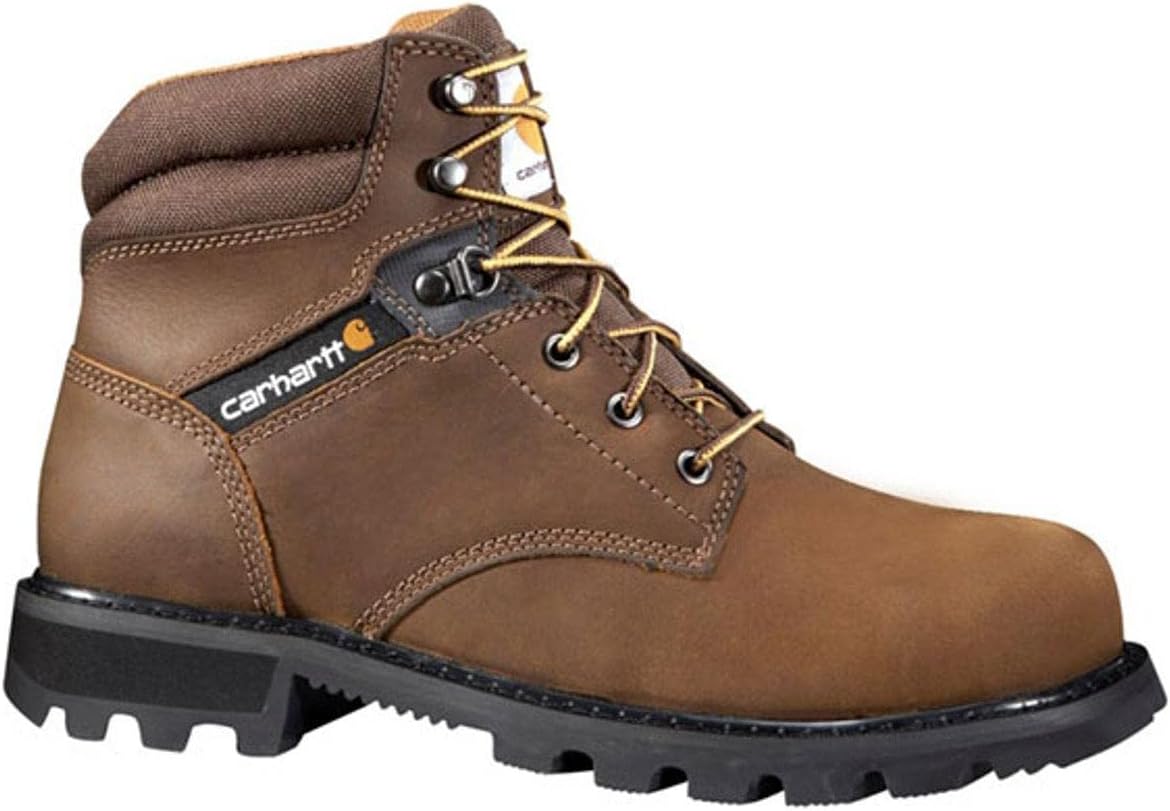
Carhartt
$144.99
In stock on Amazon
Check price on AmazonDanner Bull Run — The Mid-Tier Standard
Danner, founded in 1932 and based in Portland, Oregon, uses a traditional Goodyear welt on its heritage-line boots. The Bull Run is a work-capable leather boot with a full leather lining and a recraftable welt. Gear Junkie’s Best Work Boots guide on gearjunkie.com consistently highlights Danner’s domestic recrafting service and the wide cobbler familiarity with their construction. Because the welt is conventional, any competent cobbler can source materials and execute a resole without sending the boot back to the manufacturer — that’s a meaningful practical advantage over the hybrid construction Thursday uses.
The trade-off: Danner’s dress-adjacent options have less style range than Thursday’s lineup, and some colorways read more worksite than boardroom. If you need a boot that transitions from a job site to a restaurant without a costume change, you may find the aesthetic limiting. Buyers who primarily want a tough everyday boot and aren’t chasing a sleek silhouette will find the Bull Run a more durable long-horizon piece than the Captain.
Street price sits around $240–$270, which means the premium over Thursday is roughly $45–$70. On a cost-per-year basis over ten years, that gap narrows considerably when you factor in lower resole friction and a construction history that’s been documented across generations of owners rather than just twelve years of brand operation.
Thursday
$199.00
In stock on Amazon
Check price on AmazonAllen Edmonds Dalton — The Premium Benchmark
Allen Edmonds manufactures in Wisconsin and runs one of the most cobbler-familiar Goodyear welt operations in the American market. Wirecutter’s Best Dress Boots guide on wirecutter.com has consistently pointed to Allen Edmonds as a benchmark for resoleable dress-work boots, citing both the quality of the welt construction and the maturity of the company’s recrafting program. The Dalton is their work-capable lace-up — built on a wide last, available in multiple widths, and documented by decades of owner repair histories.
The recrafting program, which Allen Edmonds runs from its Port Washington, Wisconsin factory, includes full refinishing and typically runs $200–$240 — more than a standard cobbler resole, but more comprehensive. It’s essentially a boot restoration rather than a sole swap. For buyers who want one pair of dress-work boots to last 15–20 years without significant aesthetic degradation, this program changes the calculus.
Primer Magazine’s Best Dress Boots for Men guide on primermagazine.com frames Allen Edmonds as the right call for buyers who already know their fit, wear dress-work boots four or more days a week, and want the cobbler ecosystem to be the least-friction part of boot ownership. The trade-off is price — street price runs $295–$395 depending on the model — and a more conservative aesthetic. Trending silhouettes are not the point here. Documented longevity is.
Thursday
$199.00
In stock on Amazon
Check price on AmazonThe Numbers That Drive the Decision
The cost-per-wear math is closer than the sticker prices suggest, but it hides an assumption: that all three boots survive to resole eligibility. That assumption is more secure with Allen Edmonds and Danner — whose construction longevity is documented across decades of owner reports — than with Thursday, a brand that’s only been operating since 2014. We don’t yet have a 15-year Thursday Captain owner to interview. That’s not a knock; it’s just the actuarial reality of a young brand.
| Boot | Purchase Price | Resoles Over 10 Yr | Total 10-Year Cost | Annual Cost |
|---|---|---|---|---|
| Thursday Captain | $198 | 2 × $90 = $180 | $378 | $37.80 |
| Danner Bull Run | $260 | 2 × $80 = $160 | $420 | $42.00 |
| Allen Edmonds Dalton | $365 | 2 × $75 = $150 | $515 | $51.50 |
Resole cost estimates based on prevailing cobbler rates in mid-tier U.S. markets as of 2026. Allen Edmonds’ factory recrafting program runs higher but includes comprehensive refinishing beyond a standard sole swap.
One additional consideration the table doesn’t capture: the Thursday Captain’s hybrid welt construction may limit your cobbler options in rural markets. If shipping boots is your only resole path, Thursday’s in-house resole service becomes your primary option — and that introduces brand dependency that a traditional Goodyear welt construction avoids entirely.
Where Thursday Fits and Where It Doesn’t: A Decision Framework
If you’re under 30, building your first serious boot wardrobe, and cost is a real constraint: The Thursday Captain is the right call. It’s a legitimate resoleable boot at a price that leaves room to add a second pair. Learn your fit, develop your preferences, and upgrade with information rather than guesswork.
If you already know your fit and wear dress-work boots four or more days a week: The Danner or Allen Edmonds tier is worth the stretch. The cobbler-friendliness of a traditional welt, the transparency of leather sourcing, and the documented longevity of those constructions make the extra $65–$165 a sound investment on a cost-per-year basis.
If aesthetics and versatility are your primary drivers and you’re not logging hard miles: Consider Thursday’s own Diplomat ($248) rather than the Captain. It uses a more conventional Goodyear welt construction and slightly elevated leather, making it a stronger long-horizon piece within the brand’s lineup for buyers who want to keep one pair for years without worrying about hybrid-welt cobbler compatibility.
If made-in-USA or domestic supply chain is a purchase requirement: Thursday is not your boot. The Captain is manufactured primarily in India — which is neither a quality disqualifier nor a virtue-signal, as Indian production can be excellent, but buyers for whom American manufacturing is a requirement should be clear-eyed. Look at Allen Edmonds’ Made in Wisconsin line, Thorogood’s American Heritage Series, or White’s Boots out of Spokane.
If you want the most mature resole ecosystem and plan to keep one pair of dress-work boots for a decade or more: Allen Edmonds Dalton or Danner Bull Run. The infrastructure around those constructions — independent cobblers comfortable with the welt, factory recrafting programs, documented repair histories spanning multiple decades — is simply more developed than what a twelve-year-old direct-to-consumer brand can offer, regardless of the quality of the boot itself.
The Thursday Boot Captain is a good boot at its price. The case against it isn’t that it’s bad — it’s that the buyers most likely to read a comparison guide like this are probably ready for something more. At $198, you’re buying capability and style. At $260–$365, you’re buying a construction ecosystem. Know which one you need, and the decision makes itself.