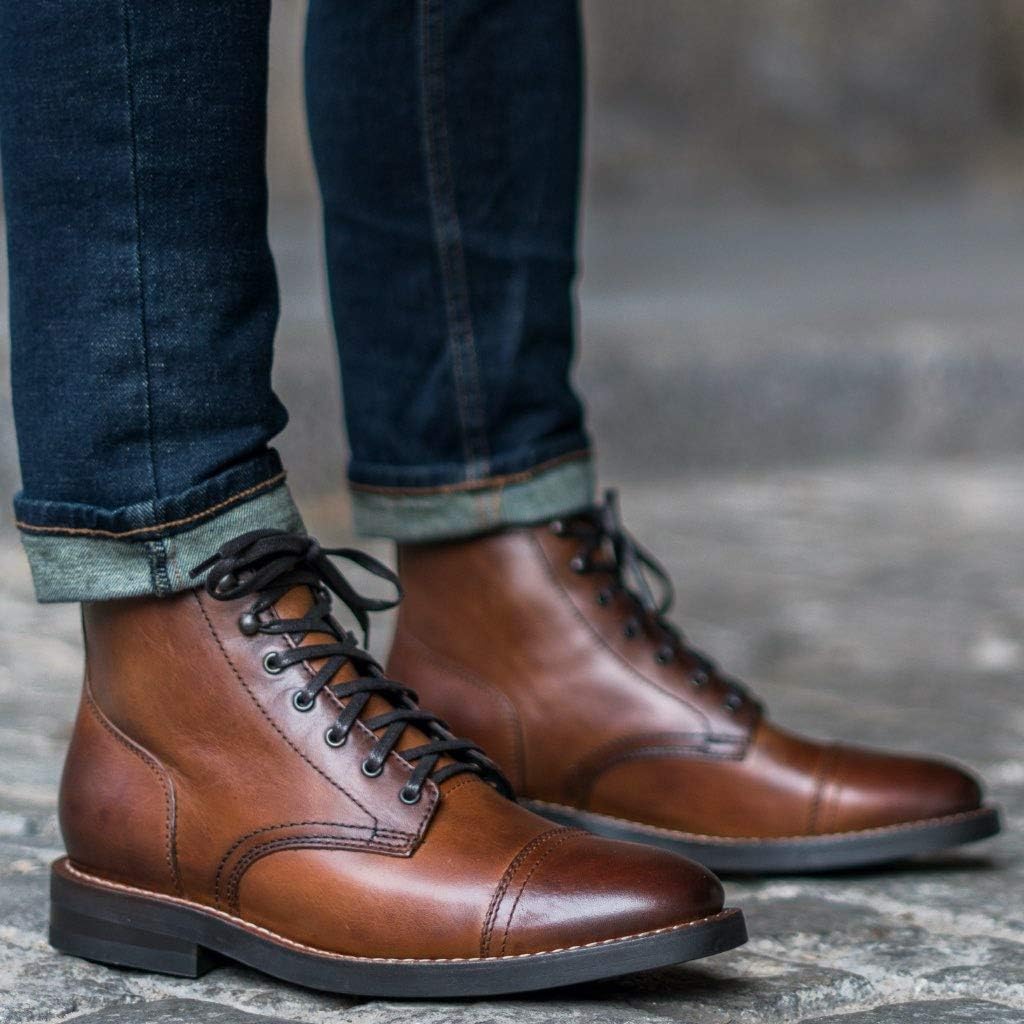
You just spent a hundred and fifty dollars on a pair of boots from a brand everyone online seems to love, and now you’re staring at two models that look nearly identical in the product photos — the Captain and the Cavalier — wondering if you picked the wrong one. Maybe your toe is already pressing forward in week one. Maybe you have a wider foot and you’re not sure whether Thursday even makes something that fits you. This guide exists for exactly that situation.
Thursday Boot Company sells direct-to-consumer, meaning there’s no brick-and-mortar store to walk into and try both boots side by side. The Captain and the Cavalier are both Goodyear welted — a stitching method that attaches the upper leather to the sole in a way that allows the boot to be resoled multiple times, extending its useful life dramatically — but they are built on different lasts. A last is the three-dimensional mold around which a boot is constructed, and that difference determines everything about how each model will fit your specific foot shape. Getting this wrong before you buy costs you return shipping, a weeks-long wait, and sometimes the frustration of realizing a size swap doesn’t solve the underlying issue.
Here’s what the aggregated owner record actually shows, and how to read it before you commit.
The Two Lasts: Kingmaker vs. RT3
The Captain is built on Thursday’s Kingmaker last. The Cavalier uses a narrower, more tapered last — referred to in brand materials and community discussions as the RT3. Understanding this distinction is the load-bearing fact in this entire comparison.
The Kingmaker last has a notably rounder, wider toe box than the RT3. Primer Magazine’s overview of Thursday’s lineup, in their piece “Thursday Boot Company Review: Are They Worth It?”, describes the Captain as fitting with a “rounded, roomier toe box” — consistent with what owners across aggregated reviews report. The RT3, by contrast, produces a slimmer silhouette: dressier looking, more tapered at the toe, but categorically less forgiving for anyone whose foot spreads toward the front.
Here’s where it gets nuanced: the Kingmaker runs rounder, but “rounder” doesn’t automatically mean pressure-free. Heddels’ Captain coverage notes that some foot shapes — particularly those with a prominent big toe or a wide forefoot relative to the heel — still experience toe box pressure on the Kingmaker despite sizing down as recommended. One reviewer documented the same pressure pattern across two different Thursday models after multiple size adjustments, which suggests a last-geometry issue rather than a sizing issue. If you’ve experienced consistent toe crowding in round-toed boots from other brands, that’s worth weighing before you order.
The practical takeaway: the Captain’s Kingmaker last is the more foot-shape-forgiving of the two. The Cavalier’s last is structurally narrower and better suited to a foot that is already on the slimmer side. If you’re in between and unsure, the Captain is the lower-risk starting point.
Sizing: The Half-Size-Down Rule and Width Data
By the numbers:
- Thursday Captain: size down ½ from your Brannock size — the standard foot-measuring device used in shoe stores — reported consistently across owner reviews
- Thursday Cavalier: size down ½ as well, but owners flag it as running narrower, so width matters more here than in the Captain
- Captain in 3E (extra wide): available, though not always in stock — owner accounts on Heddels document extended searches before locating the 3E Captain in a given colorway
- Sneaker-to-boot width translation: owners who wear EE width in Thursday sneakers report standard-width Captains fitting comfortably, suggesting the Kingmaker last runs proportionally wider in the toe than Thursday’s sneaker lasts
That last data point is counterintuitive and worth unpacking. If you’ve bought Thursday sneakers and gone up in width, don’t automatically assume you need the same accommodation in the Captain. The Kingmaker last has a toe box geometry that provides volume where it counts for most wide-footed buyers, even when the listed width is standard. This pattern appears in owner accounts aggregated by Heddels and in Primer Magazine’s sizing notes on the brand.
For true wide-foot buyers — 3E or beyond — the Captain is where Thursday’s wide-width inventory sits. The Cavalier does not appear to be offered in meaningful wide-width options, which makes the choice binary for that segment: if you need 3E, you’re buying the Captain or you’re looking at a different brand entirely.
The sizing rule in plain terms: order your normal size, then go down half. If you’re normally a 10, order a 9.5. If you land between sizes, lean toward the smaller — Thursday’s leather will stretch and the cork footbed will mold over the first several weeks of wear. A boot that’s slightly snug at purchase will typically reach a comfortable fit; a boot that’s loose at purchase will not tighten.
Captain vs. Cavalier: Head-to-Head Fit Comparison
The single most important thing to understand when sizing across these two models is that the Captain and Cavalier are not interchangeable fits. Owner accounts reviewed across Heddels and Primer Magazine consistently flag the Cavalier as running noticeably narrower than the Captain — not just at the toe, but through the midfoot as well. Field Mag’s dress boot coverage and Outside Online’s dress boot roundups both position slim-last boots in the Cavalier’s category as purposefully less forgiving: the tradeoff for a cleaner silhouette is a narrower fit window. That’s a design choice, not a flaw — but it costs you if you don’t account for it before ordering.
H3: Wide or Unsure — The Captain
If your foot is wide, or you genuinely don’t know your width, the Captain is the lower-risk entry point. The Kingmaker last’s rounder toe box provides volume where most wide-footed buyers need it, and the 3E option exists for buyers who have needed wide sizing before. Primer Magazine’s sizing notes on Thursday confirm the Captain as the brand’s more accommodating silhouette.
If you’ve sized into a Captain and it fits well, do not assume the same size in the Cavalier will work. The Cavalier may require a different adjustment, and may not work for a wide or medium-wide foot at all, regardless of size.
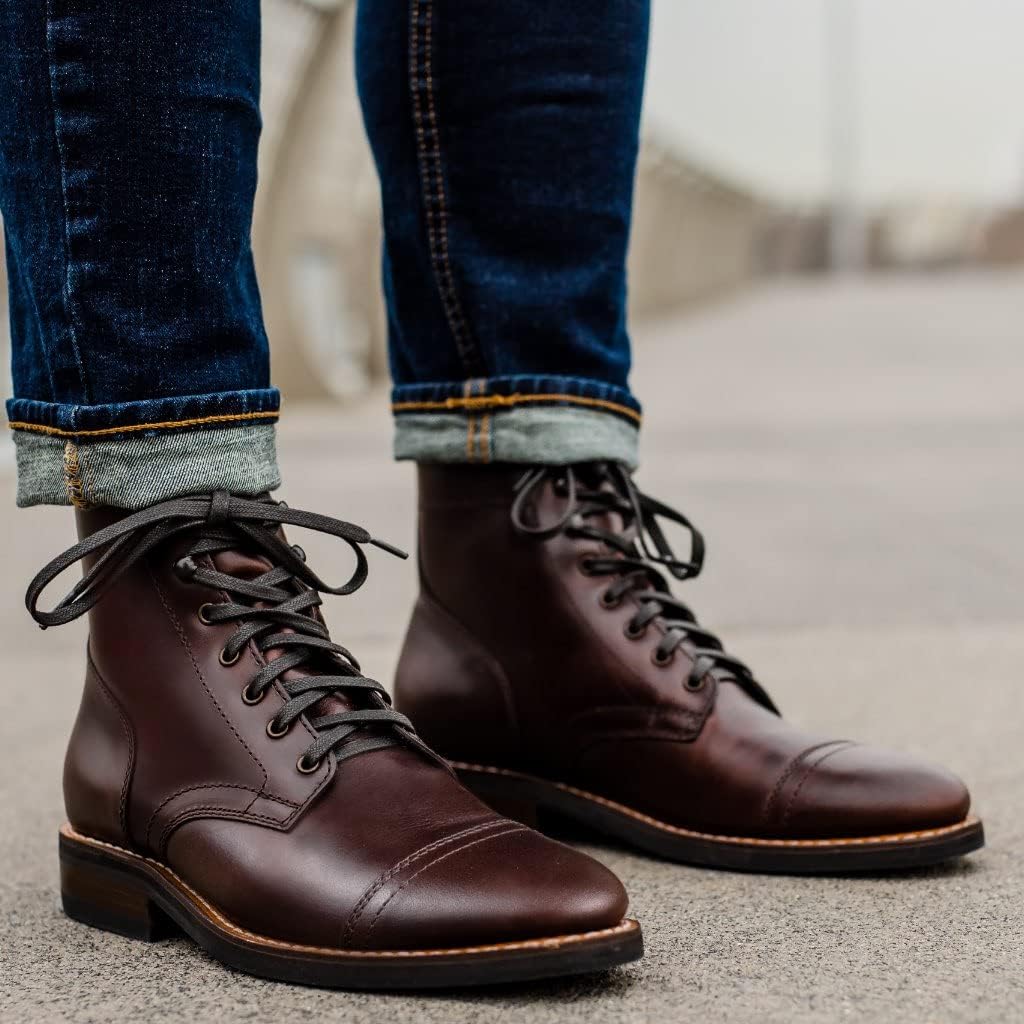
Thursday
$199.00
In stock on Amazon
Check price on AmazonH3: Narrow to Medium Foot, Dress Context — The Cavalier
The Cavalier will give a narrow-to-medium foot a cleaner silhouette and a fit that matches the aesthetic. Owners who have worn both report the Cavalier as the better choice for tailored clothing or business dress, while the Captain crosses over more naturally between dress and casual wear because of its toe shape.
If you’re coming to Thursday having fit other dress boots — think a standard Allen Edmonds Park Avenue or a Loake 1880 — the Cavalier will feel closer to that traditional dress silhouette. The Captain will feel noticeably roomier by comparison.
Thursday
$199.00
In stock on Amazon
Check price on AmazonH3: Crossing Over from Thursday Sneakers
If you wear a wide in Thursday sneakers, try the standard-width Captain before assuming you need wide. The Kingmaker last runs proportionally wider in the toe than Thursday’s sneaker lasts, and owners with EE sneaker widths report standard-width Captains fitting comfortably. This is documented in owner accounts aggregated by Heddels.
If you’ve had toe box pressure in round-toed boots from other brands despite correct sizing, that’s a foot-geometry flag, not a Thursday-specific issue. The Kingmaker may not solve it. That’s worth knowing before you order rather than after your second exchange.
Thursday
$199.00
In stock on Amazon
Check price on AmazonGoodyear Welt Construction: What “Resole-Ready” Actually Means at This Price
Both the Captain and the Cavalier are Goodyear welted, which puts them in a different category from the cemented construction used in most boots at or below their price point. Goodyear welt construction stitches a strip of leather — the welt — to both the upper and the insole, and the outsole is then stitched to that welt. The result is a boot that can be resoled by a competent cobbler without damaging the upper, potentially giving the boot a useful life of ten to twenty years with proper maintenance.
At Thursday’s price point (roughly $150–$200 as of early 2026), this is a meaningful construction differentiator. Most resoleable boots start at $300 and climb quickly — Danner, White’s, and Viberg all sit well above Thursday’s range. Thursday is positioned as an entry point into the welt-construction ecosystem, which is exactly where their buyer is: someone who understands what a welt is and wants the longevity benefit without the $400–$650 buy-in.
The honest caveat, noted in Heddels’ construction coverage of the brand: Thursday’s Goodyear welt is genuine, but the overall construction — leather thickness, insole board quality, thread weight — reflects the price point. The boot is resole-ready in the technical sense. Whether it will survive multiple resoles over fifteen years the way a White’s Semi-Dress or a Viberg Service Boot will is a separate question, and the answer depends heavily on how the boots are maintained and how aggressively they’re worn. For office wear, weekend use, and light outdoor rotation, the resole math works. For daily hard-use tradespeople, the construction ceiling may be reached before the welt gives out.
Field Mag’s buyer guides on heritage dress boots, including their “Best Dress Boots for Men” coverage, consistently position Thursday as a legitimate entry point into buy-it-for-life footwear philosophy — not the apex of that category, but a credible first rung.
Customer Service as a Decision Factor
This is worth naming because it surfaces organically and repeatedly in Captain owner reviews without being prompted: Thursday’s direct-to-consumer model means their customer service is the return and exchange mechanism, and by aggregated owner accounts, it functions well. Reviewers cite responsive communication and straightforward exchanges — notable because at this price point, DTC brands sometimes use friction in the return process as a margin-protection mechanism.
For a boot you’re buying without trying on, where the sizing guidance involves intentional deviation from your known size, the quality of the exchange process is a real variable. The pattern in owner reviews suggests Thursday has built that process deliberately, which reduces the practical risk of getting the size wrong on a first order.
Frequently Asked Questions
Should I size down on the Thursday Captain, and by how much? Yes — half a size down from your standard Brannock measurement is the consistent guidance across owner reviews aggregated by Heddels and Primer Magazine. If you’re normally a 10, order a 9.5. The leather will break in and the cork footbed will compress to your foot over the first several weeks.
Is the Captain available in wide or extra-wide widths? Yes. The Captain is offered in 3E width, though availability varies by colorway and style. Owner accounts on Heddels document extended searches before locating the 3E Captain — if wide width is your deciding factor, stock levels are worth monitoring before committing.
How does the Cavalier fit compare to the Captain — can I use the same size? No. The Cavalier runs narrower than the Captain across the toe and midfoot. Do not assume a well-fitting Captain size will translate to the Cavalier. The Cavalier may also not be viable for wide or medium-wide feet regardless of size selection.
Is the Goodyear welt on Thursday boots actually resole-ready at this price? Technically yes — the welt construction is genuine and a cobbler can resole the boot. Construction quality reflects the price point, so durability over multiple resoles depends on wear intensity and maintenance. For moderate use, the cost-per-wear math supports the investment.
What is the difference between the Kingmaker and the RT3 last? The Kingmaker (Captain) has a rounder, wider toe box. The RT3 (Cavalier) is narrower and more tapered. If you have a wider forefoot, a prominent big toe, or have experienced toe crowding in dress boots before, the Kingmaker is the lower-risk geometry. If you have a narrow, low-volume foot and want a cleaner dress silhouette, the RT3/Cavalier will fit your foot and your wardrobe better.
The Decision Rule
Wide foot, or unsure of width: buy the Captain in your standard size minus half. Check 3E availability if you’ve worn wide shoes before.
Narrow to medium foot, dressing up: the Cavalier gives you a cleaner silhouette and a fit that matches the aesthetic. Size down half regardless.
Crossing over from Thursday sneakers in wide: try the standard-width Captain first — the Kingmaker last runs proportionally wider in the toe than Thursday’s sneaker lasts, and owners with EE sneaker widths report standard-width Captains working for them.
History of toe box pressure in round-toed boots: this is a foot-geometry flag. The Kingmaker may not solve it. Know that before you order rather than after your second exchange.