
You’ve decided a $50–$150 work jacket is the right tool for the job, and now you’re drowning in options at the farm store checkout page. Before you click anything, it helps to understand what you’re actually choosing between. Duck canvas is a tightly woven cotton fabric — “duck” comes from the Dutch word doek, meaning cloth — that’s been the backbone of American workwear since the 1800s. It’s stiff at first, breaks in over time, and resists abrasion and light wind naturally. Waxed cotton takes that same base fabric and saturates it with a paraffin or petroleum-based wax coating, which adds water repellency and a distinctive matte sheen. Both materials are legitimate workhorse choices; they just make different promises. This article compares four jackets — the DRI DUCK Cheyenne, the Berne Heritage, the Carhartt Detroit, and the Legendary Whitetails Barn Chore Coat — using aggregated owner feedback and published specs so you can match the right jacket to your actual situation.
| EDITOR'S PICKCarhartt Men's Washed Duck Bart… | Mid-tierCarhartt Men's Iconic J01 Duck… | Budget pickBerne Men's Heritage Duck Hoode… | |
|---|---|---|---|
| Material | Washed duck | Duck | Duck |
| Hood | ✗ | ✗ | ✓ |
| Sizes | M | XL | L |
| Color | Black | Brown | Brown |
| Price | $149.99 | $124.99 | $78.91 |
| See on Amazon → | See on Amazon → | See on Amazon → |
What Owners Are Really Saying: The Four-Jacket Breakdown
DRI DUCK Cheyenne
The Cheyenne keeps appearing in a specific, telling context: reviewers who also own older Carhartt jackets — the pre-outsourcing era from the late 1990s — reach for it as a direct comparison. The pattern across aggregated reviews is consistent. Per reviewer feedback aggregated at Working Person’s Store (product review section, Carhartt Detroit vs. DRI DUCK listings), DRI DUCK sizes true where current Carhartt production runs oversized, and owners report the Cheyenne feels meaningfully warmer than contemporary Carhartt duck at similar price points. That warmth advantage likely comes down to DRI DUCK’s signature quilted flannel lining, which adds an insulating layer that some bare-canvas Carhartt alternatives skip.
What the Cheyenne doesn’t get credit for is brand prestige — DRI DUCK doesn’t carry the same cultural weight as Carhartt in a jobsite context, which matters to some buyers and is irrelevant to others. But if your purchase decision is grounded in performance-per-dollar rather than logo recognition, the Cheyenne earns serious consideration. The articulated back design on DRI DUCK’s Bartlett model (a close sibling in the lineup) is called out by owners specifically for enabling arm reach without jacket restriction — a detail that separates a jacket you can work in from one you take off to work.
Tradeoff summary: True sizing, warm lining, underrated brand recognition. Slightly less institutional cachet than Carhartt in crew contexts.
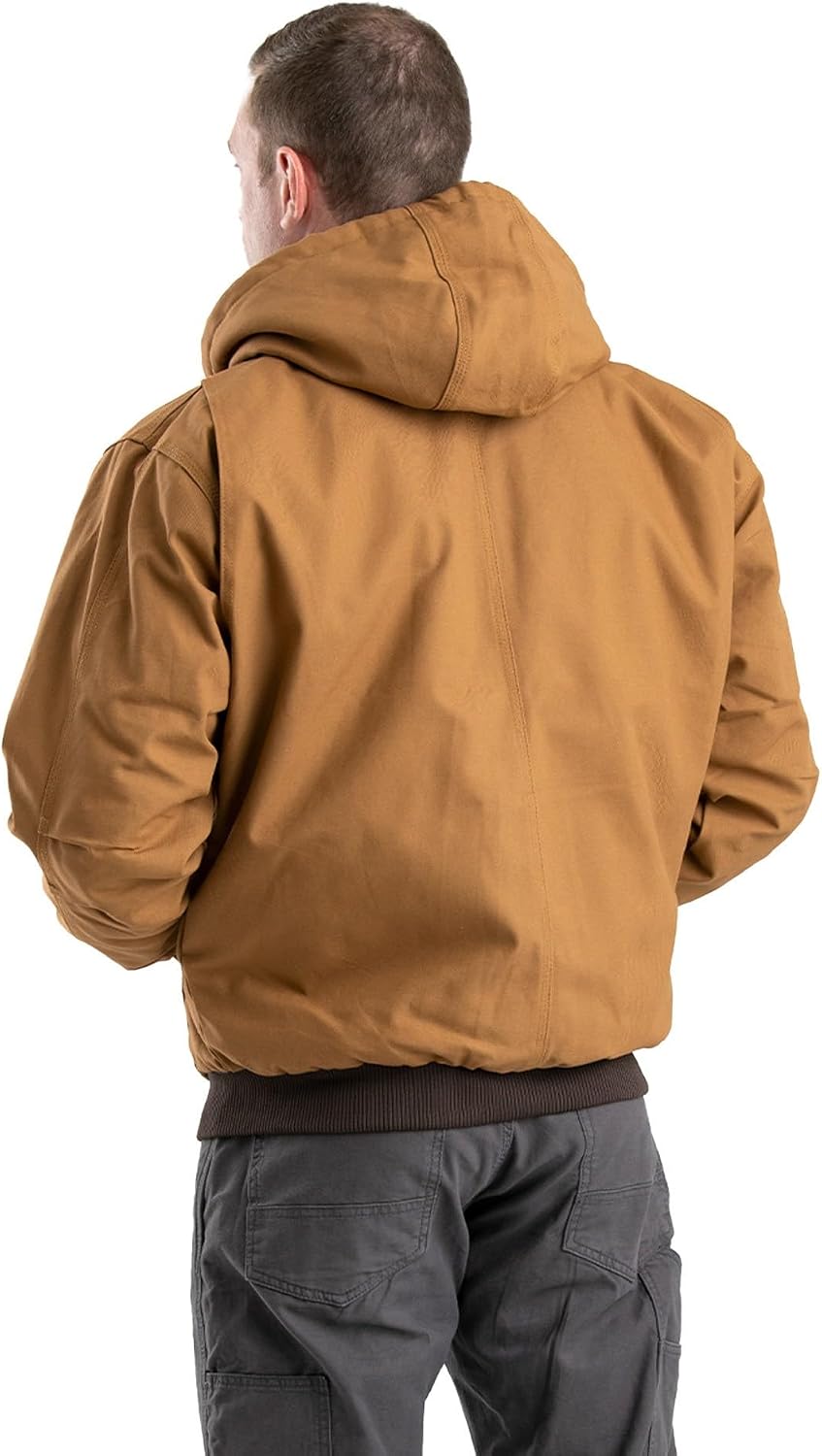
Berne
$78.91
In stock on Amazon
Check price on AmazonBerne Heritage
The “as good as Carhartt but cheaper” framing is a cliché in budget workwear discussions, but in the Berne Heritage’s case, multiple independent owners keep landing on it unprompted. That’s a meaningful signal. Gear Junkie, in its roundup titled “Best Work Jackets for Tradespeople,” notes Berne as a legitimate volume alternative for small-business owners outfitting crews who don’t need to wear a logo brand but do need real durability.
Where Berne earns its reputation is in the construction basics: the duck canvas weight is competitive with Carhartt’s standard offerings, the stitching holds up in extended owner reviews, and the price floor sits noticeably lower than the Detroit. For a crew-outfit scenario where you’re buying six jackets instead of one, that delta adds up fast.
The honest caveat: Berne’s Heritage line doesn’t have the decades-deep repair-and-replace ecosystem that Carhartt has built. If a zipper fails or a seam blows out, you’re more likely to replace the jacket than send it somewhere for restoration. At this price point, that’s probably fine — the cost-per-wear math still works.
Tradeoff summary: Competitive duck canvas durability at a lower price. Ideal for crew outfitting. Thinner resale and repair infrastructure than Carhartt.
Berne
$78.91
In stock on Amazon
Check price on AmazonCarhartt Detroit
The Detroit is the reference point everything else gets measured against, and it deserves the reputation — with an important asterisk that owners report consistently enough to call it structural.
The sizing paradox is real. Across aggregated reviews collected at Working Person’s Store (Carhartt Detroit product listing, owner review section), owners describe a body cut that runs large for layering while the sleeves fit comparatively slim — a combination that creates proportion problems that aren’t fixable by simply sizing up or down. One reviewer in that collection returned a Large after it fit, in their words, like a child wearing a grandparent’s jacket, and found that the Medium corrected the body proportion while the sleeve length remained workable. If you’re between sizes or have longer-than-average arms, try the Detroit in person if possible. Ordering blind online means you may be sizing and returning twice before you land on the right combination.
Beyond sizing: the post-outsourcing quality conversation is real and ongoing. Heddels, in its feature “Duck Canvas: The Fabric That Built American Workwear,” traces the shift in Carhartt’s production mix over the 2000s and 2010s. Owners who grew up in late-1990s Carhartt jackets notice the difference in fabric hand and construction density. This doesn’t make the current Detroit a bad jacket — it’s still a competent piece of work outerwear — but it does mean the premium you’re paying over Berne buys you legacy brand equity and a proven repair ecosystem more than it buys you materially superior canvas.
Tradeoff summary: The genre-defining reference jacket. Real sizing issues that require in-person or careful online attention. Post-outsourcing quality has leveled toward the category average. Strong repair and replacement ecosystem.
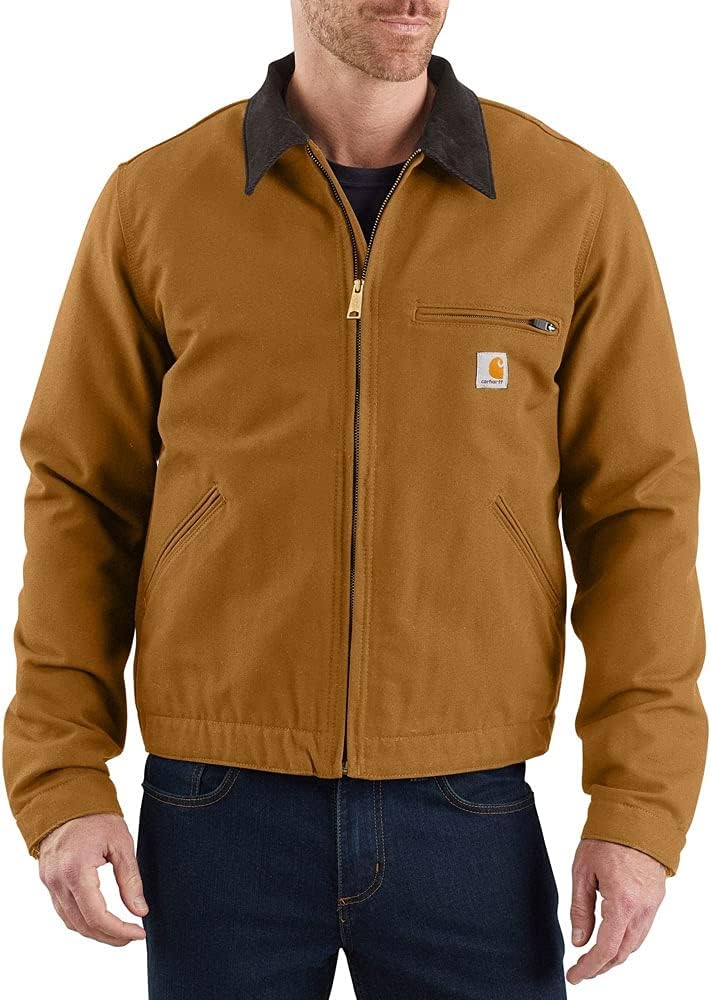
Carhartt
$124.99
In stock on Amazon
Check price on AmazonLegendary Whitetails Barn Chore Coat
This one targets a different buyer psychology than the other three. The Barn Chore Coat leads with waxed aesthetics — that dark, oil-finished look that signals outdoors credibility — combined with practical warmth that owners report as genuinely useful rather than decorative.
The honest thermal data from owner feedback: one reviewer sets the warmth floor at the low 30s Fahrenheit as a standalone layer, while acknowledging that once temperatures drop into the 20s, layering becomes necessary. That’s a real and useful data point. If your work or outdoor use regularly dips below freezing, the Barn Chore Coat functions as a shell with light insulation, not a serious cold-weather system on its own.
Where it consistently earns praise is pocket count. Multiple owners identify it as a differentiator — tradespeople who need to carry tools, phones, pens, and job-site cards without a vest appreciate the storage architecture. For that specific use case, it outperforms the Detroit and the Cheyenne in functional organization.
The waxed surface requires maintenance over time. Field Mag, in its guide “Waxed Canvas Care and Re-Waxing Guide,” details the re-waxing process and recommends treatment when the surface visibly loses water beading — typically after one to two seasons of active use. Factor that into your ownership cost estimate.
Tradeoff summary: Best pocket storage in this comparison. Waxed aesthetic with genuine weather protection. Warmth floor around 30°F without layering. Ongoing re-waxing maintenance required.
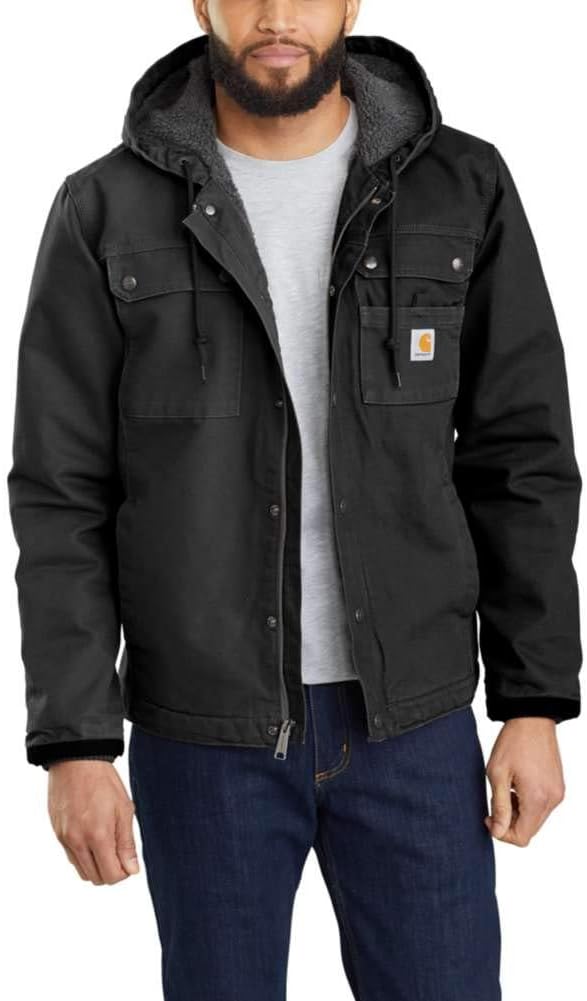
Carhartt
$149.99
In stock on Amazon
Check price on AmazonBy the Numbers
| Jacket | Price Range | Warmth Floor (Owner Reports) | Sizing Tendency | Pocket Count Rank |
|---|---|---|---|---|
| DRI DUCK Cheyenne | $65–$90 | Mid-30s°F standalone | True to size | Mid |
| Berne Heritage | $50–$75 | Mid-30s°F standalone | Slightly generous | Mid |
| Carhartt Detroit | $80–$120 | Mid-30s°F standalone | Oversized body, fitted sleeves | Mid |
| Legendary Whitetails Barn Chore Coat | $90–$150 | Low 30s°F standalone | True to size | High |
Warmth floors reflect aggregated owner use-conditions, not manufacturer ratings.
The Decision Frame: If X, Then Y
This is the part of the article where you stop comparing and commit.
If you’re outfitting a crew and need six jackets instead of one: The Berne Heritage is the call. The quality delta between Berne and current Carhartt doesn’t justify the price gap at volume. Save the difference and spend it on better gloves or boots.
If you’re buying a single jacket for daily trade use and want the most warmth per dollar: The DRI DUCK Cheyenne is the one to look at seriously. Owners who’ve run both legacy and current Carhartt consistently rate it warmer and better-proportioned at a similar or lower price.
If brand recognition on a jobsite matters to your working context: The Carhartt Detroit is still the institutional answer. Just size it in person if you can, or order one size down from your usual if buying online and not planning heavy layering underneath.
If you spend time outdoors in variable weather — hunting, fencing, trail maintenance — and prioritize storage and weather protection over pure warmth: The Legendary Whitetails Barn Chore Coat earns the nod. Accept that you’ll be layering below 30°F and that the waxed surface needs periodic re-treatment.
Frequently Asked Questions
Does the DRI DUCK Cheyenne hold up as well as Carhartt in daily field use?
Based on aggregated long-run owner reviews collected at Working Person’s Store, the Cheyenne holds up comparably to current-production Carhartt duck canvas jackets in daily trade use. Owners who’ve run both simultaneously report no meaningful durability disadvantage on the DRI DUCK side. The brand’s quality trajectory has remained consistent, which gives buyers reasonable confidence in durability claims.
How should buyers size the Carhartt Detroit given the body-to-sleeve fit inconsistency?
The reliable approach: try it in person at a farm or workwear retailer if one is accessible. If ordering online, owners recommend sizing down one step from your usual Carhartt size, particularly if you’re not planning to layer heavily underneath. The body runs large while the sleeves fit closer to standard, so the “size down” rule tends to correct the body proportion without making the sleeves unworkable.
What temperature range can the Legendary Whitetails Barn Chore Coat handle without layering?
Owner reports consistently put the comfortable standalone range from approximately 35°F down to the low 30s. Below 30°F, owners add a mid-layer fleece or heavy flannel shirt. The waxed canvas provides genuine wind and light moisture protection, but the insulation package isn’t designed for sustained sub-freezing exposure without assistance.
Is the Berne Heritage actually as durable as Carhartt duck canvas?
Per owner feedback aggregated at Working Person’s Store and consistent with Gear Junkie’s reporting in “Best Work Jackets for Tradespeople,” the Berne Heritage uses comparable duck canvas weight and construction to current Carhartt standard-line offerings. The “as good as Carhartt” framing that multiple owners reach for independently is credible — with the caveat that Berne’s repair and replacement ecosystem is thinner. For buyers who plan to wear a jacket until it fails and then replace rather than restore it, Berne is a legitimate durable alternative.
Which jacket has the most pocket storage for tradespeople?
The Legendary Whitetails Barn Chore Coat is the consistent winner on pocket count across owner feedback. Multiple reviewers specifically cite the pocket architecture as a differentiating reason to choose it over duck canvas alternatives. If your daily carry includes a phone, measuring tape, pens, cards, and small tools, the Barn Chore Coat is built for that load.
Does waxed cotton require re-waxing treatment and how often do owners do it?
Yes — the waxed finish on the Barn Chore Coat and similar waxed-cotton jackets is not permanent. Field Mag’s “Waxed Canvas Care and Re-Waxing Guide” recommends re-waxing when the surface visibly loses water beading, which typically occurs after one to two seasons of active use. The process involves applying a purpose-made wax bar to the jacket surface and warming it in with a heat gun or a dryer set to low heat. Otter Wax and Fjällräven Greenland Wax are the two most commonly cited products in owner discussions. Add roughly 30–45 minutes and $10–20 in product to your annual ownership cost if you want the jacket to maintain its water-repellent performance.