You just landed your first real worksite job in November, or maybe you’re outfitting yourself for a winter of fencing, hunting, or general outdoor labor — and you’re staring at two very different types of jackets with similar price tags and wildly different promises. One is duck canvas — a tightly woven, heavy cotton fabric (think: the same material as old-school painters’ tarps, but cut and sewn into a jacket) that’s been the go-to for American tradespeople for over a century. The other is waxed cotton — duck canvas or a similar base fabric that’s been saturated with a wax compound, giving it a slick, slightly waxy feel and a much stronger initial resistance to water. Both will outlast a polyester shell by years. But they perform very differently in cold and wet conditions, they require different care, and they fit different working contexts. This article maps out those differences so you can match the right material to your actual conditions — not just the better-looking jacket on the rack.
| EDITOR'S PICKCarhartt Men's Washed Duck Bart… | Mid-tierCarhartt Men's Iconic J01 Duck… | Budget pickBerne Men's Heritage Duck Hoode… | |
|---|---|---|---|
| Shell fabric | Washed duck | Duck | Duck |
| Hood | — | — | ✓ |
| Fit | — | — | Active |
| Price | $149.99 | $124.99 | $78.91 |
| See on Amazon → | See on Amazon → | See on Amazon → |
What Each Material Actually Does
Duck canvas is a plain-weave cotton fabric, typically ranging from 8 oz to 12 oz per square yard in work jacket applications. The tight weave creates a wind-resistant shell that will shed light moisture for a while — but it’s not waterproof. Water will eventually soak through, especially at seams. What duck canvas does exceptionally well is abrasion resistance: drag a duck canvas sleeve across a rough concrete wall and it shrugs it off. It breathes reasonably well, it doesn’t trap heat in the same suffocating way as synthetics, and it softens and conforms to your body over time. As Heddels explains in their fabric guide “Duck Canvas: The Fabric Guide,” the material’s durability comes from its yarn density, not any coating — which is also why it responds well to oil and wax treatments applied after purchase.
Waxed cotton starts with a similar base fabric — sometimes duck, sometimes a lighter canvas weave — and adds a paraffin or beeswax compound that fills the gaps between fibers. The result is a jacket that repels rain actively rather than just delaying its progress. Water beads and runs off rather than soaking in. Field Mag, in their editorial piece “Best Waxed Canvas Jackets,” consistently highlights this distinction: waxed cotton is the right call for sustained wet-weather work, not just a light drizzle. The tradeoff is breathability — waxed cotton runs warmer and clammier in high-exertion conditions, and the wax coating needs periodic re-application (once a year under heavy use, every few years under light use) to maintain its water-shedding performance.
The core tradeoff in one sentence: Duck canvas is more breathable and durable under abrasion; waxed cotton keeps you drier in rain but runs warmer and requires maintenance.
Warmth: What Linings and Owner Reports Actually Reveal
Neither material is inherently a strong insulator on its own — warmth in both jacket types comes primarily from quilted or flannel linings, not the shell fabric. That said, the two materials create meaningfully different microclimates.
Budget Tier: Duck Canvas with Quilted Lining
The most accessible entry point is a quilted-lined duck canvas jacket — the Carhartt Active Jac and the DRI DUCK Cheyenne Jacket being the two most commonly compared options in this tier. Both use 12 oz duck canvas shells with quilted poly-fill linings. Owner reports across workwear forums and retailer pages put the comfortable warmth floor at approximately 30–40°F during active work — meaning they’re suitable for a full shift in cold but not brutal conditions, especially if you’re moving enough to generate body heat.
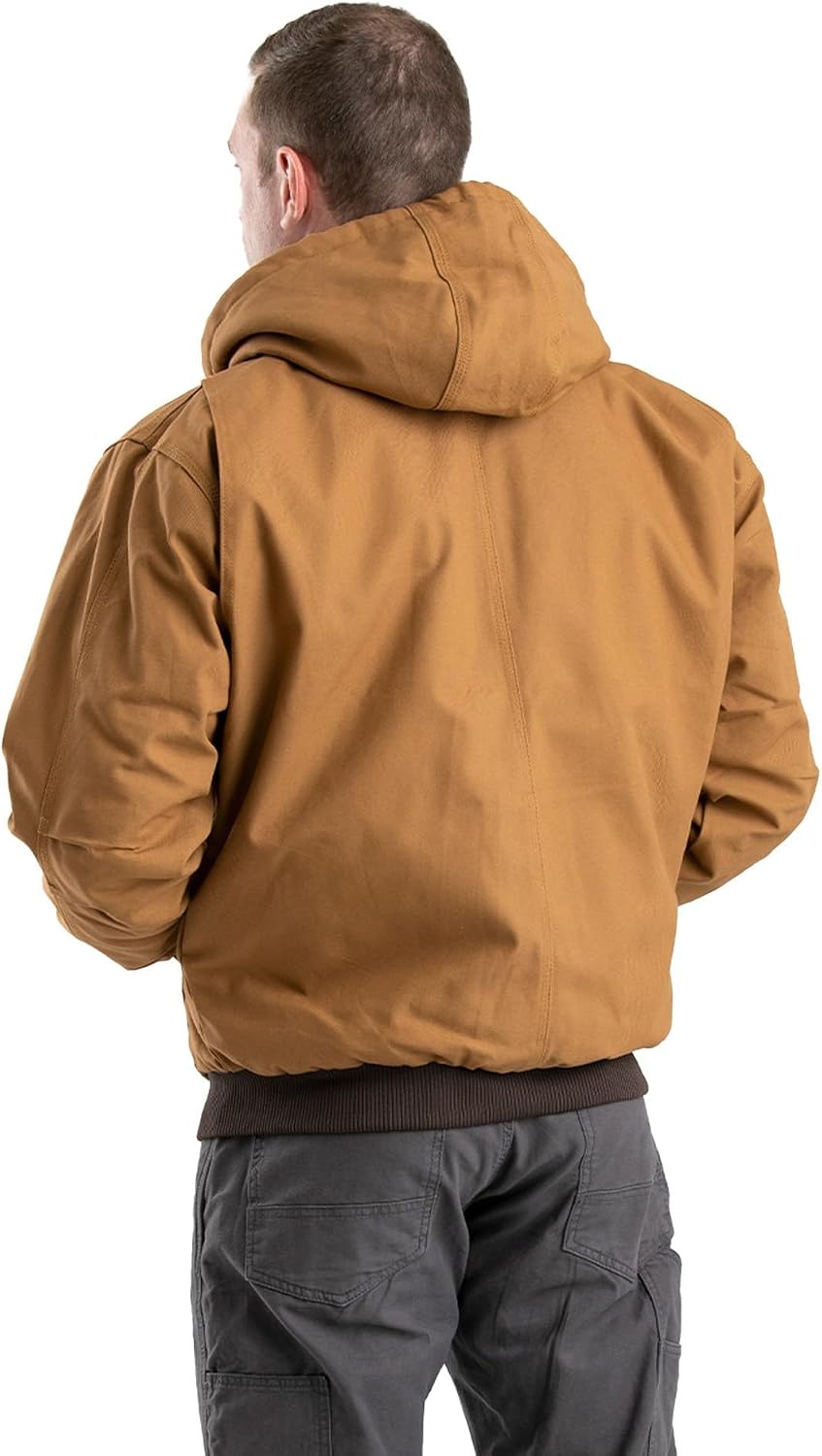
Berne
$78.91
In stock on Amazon
Check price on AmazonMid-Tier: Duck Canvas with Blanket or Sherpa Lining
Step up the lining and the warmth profile changes meaningfully. The Carhartt Detroit Jacket (blanket-lined) and the Legendary Whitetails Barn Chore Coat (quilted with sherpa panels) both push the warmth floor down to the low-to-mid 20s°F when layered, or a reliable 32–35°F without a base layer. The Legendary Whitetails Barn Chore Coat is notable in this tier because owners are unusually specific: in aggregated retailer reviews, the warmth floor at the low 30s without layering is cited consistently — more precisely than most duck canvas owners report, which likely reflects the heavier sherpa lining rather than anything the shell fabric contributes.
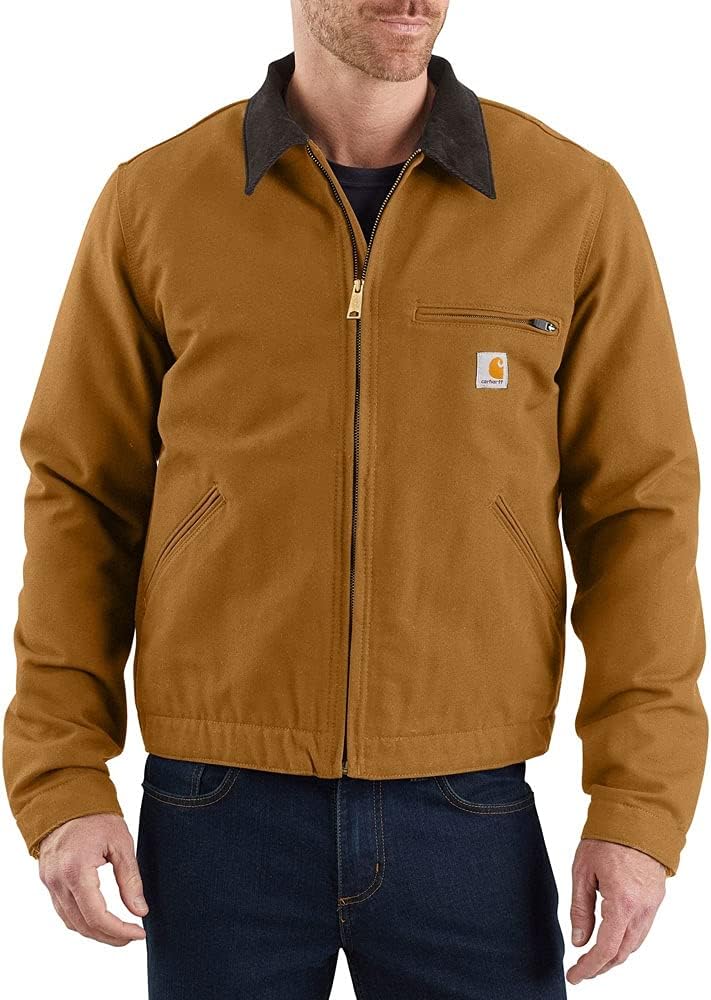
Carhartt
$124.99
In stock on Amazon
Check price on AmazonPremium Tier: Waxed Canvas with Proprietary Shell
Filson’s Tin Cloth line represents the premium waxed canvas tier. The Filson Mackinaw Cruiser uses a different approach entirely — a heavy wool shell rather than waxed cotton — but Filson’s waxed Tin Cloth jackets use the brand’s proprietary waxed canvas compound on a dense base fabric. Owners consistently report decade-spanning garment life with periodic re-waxing. The tradeoff is weight and cost: a Filson Tin Cloth jacket runs significantly heavier than a duck canvas alternative and costs more than two Carhartt Detroit Jackets. For buyers who treat outerwear as a capital investment rather than a consumable, the cost-per-wear math over 15 years is genuinely favorable.
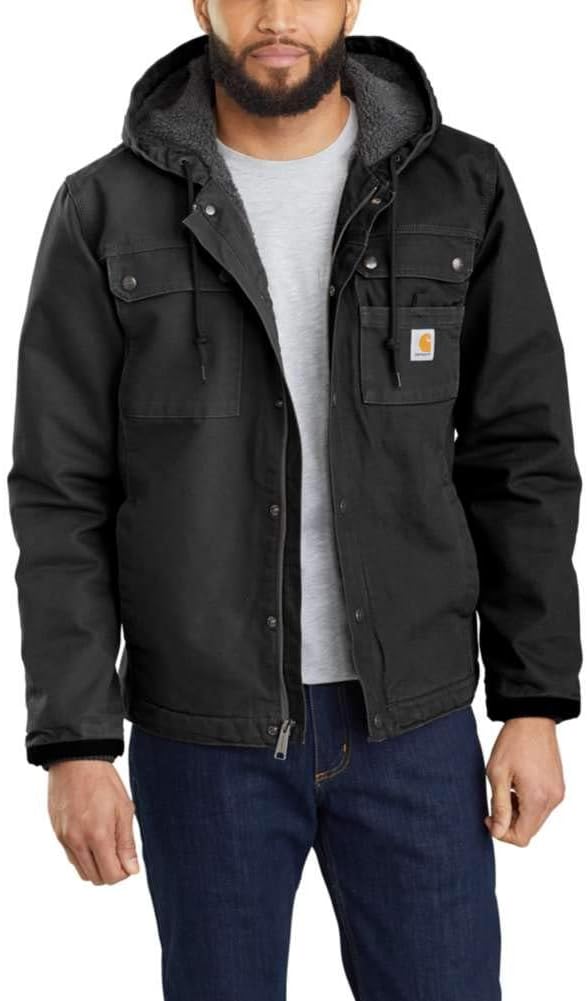
Carhartt
$149.99
In stock on Amazon
Check price on AmazonWater Resistance: Where the Gap Is Bigger Than You’d Think
This is where the material choice matters most, and where buyers often make the wrong call by assuming duck canvas will “hold up fine.”
Budget Tier: Untreated Duck Canvas in Rain
A tightly woven 12 oz duck shell will shed light drizzle for 20–30 minutes before moisture begins to penetrate, especially at the shoulders and seams. Most duck jackets are not seam-sealed. Popular Mechanics, in their guide “Best Work Jackets for Men,” confirms this pattern — duck canvas is water-resistant, not waterproof, and the distinction matters the moment you’re caught in a sustained downpour or working in a barn with constant drip exposure. After 30–60 minutes of real rain, duck canvas soaks through, holds water weight, gets cold, and takes a long time to dry. This is the material’s primary limitation, and it’s why so many tradespeople who work in genuinely wet climates eventually add a waxed shell or resign themselves to carrying a rain layer over their duck jacket.
Berne
$78.91
In stock on Amazon
Check price on AmazonMid-Tier: Waxed Cotton, Maintained vs. Depleted
The wax coating actively sheds water rather than delaying it. Gear Junkie, in their jacket reviews and Carhartt roundup coverage, notes that properly maintained waxed canvas will keep a wearer dry through hours of rain exposure in a way no untreated duck canvas can match. The caveat is “properly maintained” — a waxed jacket with depleted wax performs worse than a fresh duck canvas shell, because the worn wax layer can actually wick moisture inward. Re-waxing with a product like Otter Wax or the brand’s own compound is a real maintenance step, not a marketing footnote. Expect to re-wax annually under heavy use, every two to three years under light use.
Carhartt
$124.99
In stock on Amazon
Check price on AmazonPremium Tier: Filson Tin Cloth and Long-Horizon Wet-Weather Protection
Outside Online, in their roundup “Best Work Jackets,” notes that waxed shells feel subjectively warmer in still, cold conditions but can become uncomfortable when you’re moving hard — the reduced breathability turns body heat into a damp, clammy situation. For static work in cold and wet (standing gate watch, working a deer blind, directing traffic on a construction site), waxed cotton’s warmth and water-resistance profile is a genuine advantage. Filson’s Tin Cloth builds on this with a heavier base weight that holds wax more effectively and longer between re-applications, making it the correct call for buyers who work in genuinely wet climates year over year and want a single garment to last 10–15 years.
Carhartt
$149.99
In stock on Amazon
Check price on AmazonBrand Notes: Carhartt, DRI DUCK, and the Quality-Trajectory Question
Carhartt is the reference point for duck canvas work jackets in North America, and it’s worth naming the elephant in the room: longtime Carhartt buyers are not uniformly satisfied with the current product. In aggregated reviews across retailer pages, a notable pattern among Carhartt duck jacket buyers is explicit nostalgia for late-1990s domestic production. Carhartt’s manufacturing shifted offshore significantly in the early 2000s, and while the brand maintains consistent specifications (12 oz duck, triple-stitched seams), veteran buyers report a perceived decline in fabric hand and construction tightness compared to pre-offshore product.
DRI DUCK — specifically the Cheyenne Jacket — comes up repeatedly in direct comparisons to Carhartt duck jackets, and the verdict from owners is more favorable than the brand’s lower profile might suggest. Long-time Carhartt users in aggregated reviews describe the DRI DUCK as competitively priced and comparable in warmth — a claim worth taking seriously but also with caveats. Warmth perception is subjective and lining-dependent; the DRI DUCK Cheyenne uses a quilted lining that may run marginally warmer than some Carhartt Detroit configurations. Durability over multi-year heavy use is harder to assess from reviews alone, and Carhartt’s repair and replacement ecosystem is broader.
Filson represents the waxed cotton premium tier. Heddels, in their fabric guide coverage of waxed canvas construction, notes that heavier-base waxed fabrics hold compound longer and resist abrasion at the wax layer more effectively than lighter alternatives — which is the structural reason Filson’s Tin Cloth jackets command premium pricing and deliver on long-run durability claims. The weight penalty is real: a Filson Tin Cloth jacket is noticeably heavier than any duck canvas alternative in the same category.
Frequently Asked Questions
How do I size a Carhartt duck jacket — do I order my normal size or size down?
Size down, or at minimum try before you buy. The Carhartt Detroit Jacket and Active Jac both run large. In aggregated reviews, buyers consistently describe receiving a jacket that fit like “a 5-year-old trying on Grandpa’s suit jacket” and exchanging for a size smaller. The Active Jac is described as especially voluminous out of the box. If you’re buying online without trying it on, order your measured chest size in the next size down from your usual and plan to exchange if needed. Carhartt’s sizing on duck jackets has generated more buyer confusion than almost any other workwear product in its category.
Will a duck canvas jacket keep me dry in sustained rain, or do I need waxed cotton?
Duck canvas will not keep you dry in sustained rain. It sheds light drizzle for 20–30 minutes, then soaks through — especially at seams. If your work involves extended exposure to rain (not just walking to the truck), waxed cotton is the correct material. Alternatively, layer a quality duck canvas jacket under a packable rain shell when conditions turn severe.
How warm is the Legendary Whitetails Barn Chore Coat without layering underneath?
Owner reports consistently put the warmth floor at the low 30s Fahrenheit — meaning most wearers are comfortable down to about 32–35°F without adding a base layer. Below that, a midlayer or thermal base layer is recommended. This estimate is more precise than most duck canvas owners offer and likely reflects the jacket’s heavier sherpa-style lining rather than the shell fabric.
Is the DRI DUCK Cheyenne actually as durable as a Carhartt duck jacket?
Based on the available review record, the DRI DUCK Cheyenne performs comparably over the first few seasons of use. Long-term durability over five-plus years of heavy work is harder to assess — Carhartt simply has a longer track record in this specific use case. For budget-conscious buyers, DRI DUCK represents strong value. For buyers who want a proven decade-long performer, Carhartt or a step up to Filson is the safer bet.
Has Carhartt’s duck canvas quality changed, and are there comparable alternatives?
Yes, meaningfully. The shift away from domestic production in the early 2000s is consistently cited by long-term buyers as a quality inflection point. Alternatives worth considering: DRI DUCK for budget-comparable duck canvas, Filson Tin Cloth for premium waxed canvas with a domestic heritage, and Pointer Brand for made-in-USA duck canvas if origin matters to you.
The decision rule: If you work in sustained wet conditions — waxed cotton, maintained annually, sized to fit a midlayer. If you work in dry-cold or high-abrasion environments — duck canvas, sized down one from Carhartt standard, budget-tier from DRI DUCK or invest up to Filson if you want a 15-year garment. The materials aren’t competing; they’re answering different questions.