You just spent a long shift on concrete floors wondering why your feet feel like they’ve been through a gravel tumbler — and now you’re staring at three Wolverine boots that all say “waterproof” on the box, all look more or less similar from ten feet away, and all sit in the $130–$175 price band. Which one actually fits your job? Wolverine is a Michigan-founded brand established in 1883 with deep roots in American workwear manufacturing, as documented in Heddels’ brand overview and heritage context. Their waterproofing systems use either a bonded waterproof membrane — a thin barrier layer bonded inside the boot lining that blocks water from entering — or treated full-grain leather, a dense, minimally-processed cowhide that naturally resists moisture. The Overpass, Floorhand, and Raider DuraShocks each take slightly different approaches to the same core problem: keeping your feet dry, supported, and intact through a full shift. This article maps out exactly where each boot wins, where it compromises, and which profile of worker belongs in which boot.
| EDITOR'S PICKWolverine Men's Overpass Compos… | Mid-tierWolverine Men's Raider DuraShoc… | Budget pickWolverine Floorhand Waterproof… | |
|---|---|---|---|
| Safety toe | Composite | — | Steel |
| Waterproof | ✓ | — | ✓ |
| Shaft height | — | 6 in | 6 in |
| Color | Summer Brown | Peanut | Dark Brown |
| Sizes listed | 10 | 7.5 | 10 |
| Price | $179.95 | $129.99 | $103.58 |
| See on Amazon → | See on Amazon → | See on Amazon → |
The Three Contenders at a Glance
Before diving into specifics, a quick orientation on the lineup. All three boots share Wolverine’s core waterproofing architecture and a six-inch shaft height, but the toe construction, midsole philosophy, and target work environment diverge in ways that matter considerably once you’re eight hours into a shift.
| Boot | Toe Type | Approx. Weight (pair) | Key Comfort Tech |
|---|---|---|---|
| Overpass | Composite | ~3.5 lb | Multi-density foam bed |
| Floorhand | Steel | ~3.8 lb | Direct-attach outsole |
| Raider DuraShocks | Steel | ~3.6 lb | DuraShocks energy return |
Weights per Wolverine Worldwide published specification sheets, 2024–2025.
The table above gives you the skeleton. The sections below supply the reasoning.
Head-to-Head: Three Boots, Three Work Profiles
Overpass: The Concrete-Floor Specialist
The Overpass is the boot Wolverine built for the worker who never leaves pavement. Warehouse associates, production-line supervisors, and airport ground crew are the target — people who aren’t climbing rebar or wading creeks, but who spend ten-hour shifts walking hard flat surfaces where every ounce of underfoot cushioning matters.
The composite toe is the first decision point. A composite toe uses non-metal materials — typically fiberglass, carbon fiber, or Kevlar — to meet the same ASTM F2413 safety toe standard as steel without the cold conductivity or metal-detector complication. Workers who pass through security checkpoints daily, or who work in environments where metal toes become uncomfortably cold in winter, will feel the advantage immediately. According to Gear Junkie’s Best Work Boots of 2025: Tested and Reviewed, modern composite toe construction has closed most of the structural gap with steel toes while eliminating cold conductivity — meaning the difference you’ll notice is the absence of negatives rather than a dramatic new sensation.
Owners consistently report that after initial break-in, the composite toe becomes largely invisible — it doesn’t create the localized pressure points that steel toes sometimes generate at the front edge of the toe box.
The underfoot story is where the Overpass earns its strongest reviews. The multi-density foam midsole stack layers softer foam at the footbed level over a firmer foundation, distributing load rather than concentrating it. Aggregated owner accounts return to one idea: insulation from the surface beneath them. That language is notable for a work boot, where the usual complaint is exactly the opposite.
The honest caveat is weight. At approximately 3.5 pounds per pair, the Overpass sits in the middle-heavy range for this category, and owners consistently flag the first two to three weeks as a fatigue period. The break-in discomfort tends to be stiffness rather than pain, and the boot conforms without the multi-week ordeal that heavier heritage boots can require.
The Overpass is your boot if: You’re on concrete or hard flat floors for the majority of your shift, you pass through security screening, or you work in cold environments where a steel toe becomes a liability.
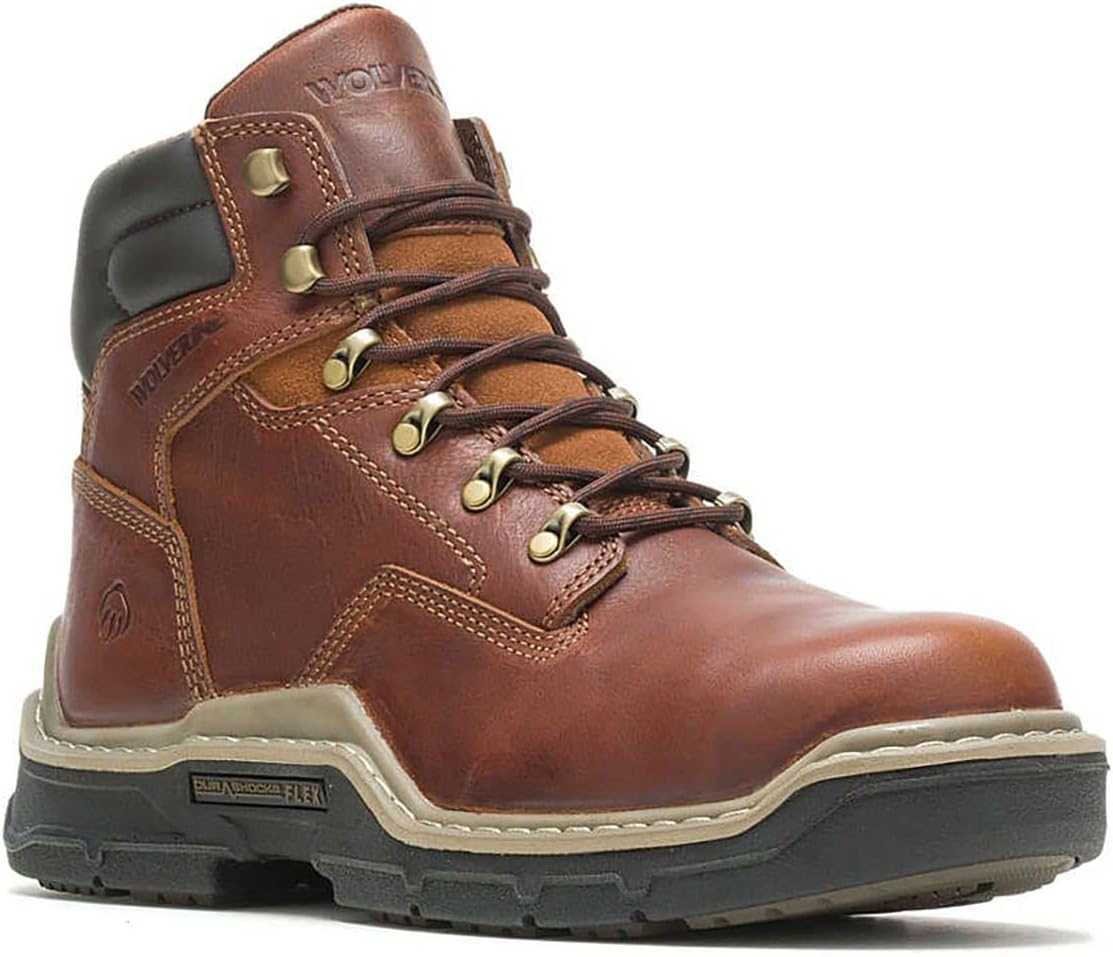
Wolverine
$129.99
In stock on Amazon
Check price on AmazonFloorhand: The Field Worker’s Loyalty Pick
The Floorhand has the most emotionally invested owner base of the three. In long-run owner accounts, reviewers return to the Floorhand specifically — not just to Wolverine as a brand — and cite tenure with the model measured in years rather than months. One owner account notes nearly fifteen years of brand loyalty with the Floorhand as their anchor boot. That’s a durability signal worth taking seriously.
The boot’s name is appropriately literal. “Floorhand” is oilfield terminology for entry-level rig workers — people who work in wet, muddy, chemically variable environments where a boot needs to shed water reliably and hold up to abuse that would destroy a fashion-adjacent work boot in weeks. Working Person’s Store’s editorial overview of the Wolverine waterproof work boot lineup specifically notes that the Floorhand’s waterproof membrane is designed for trade-environment moisture loads rather than incidental splash protection. Reviewers who work in field trades, outdoor maintenance, and light construction highlight the waterproofing for walking through standing puddles as a functional strength, not just a marketing claim.
The Floorhand uses a steel safety toe, which for most field workers is the right call. Steel toes are heavier than composite but have a longer track record in environments with impact hazards from equipment and materials. The direct-attach outsole construction — where the outsole is bonded directly to the upper rather than stitched on — creates a sealed lower profile that resists water infiltration at the sole-upper seam, which is often the first failure point in waterproof boots subjected to real field conditions.
Where the Floorhand earns less enthusiasm: it is not the boot for someone prioritizing cushioning first. Owners who need aggressive shock absorption for joint health tend to migrate toward the Raider DuraShocks. The Floorhand is a working-tough boot, not a medical-grade comfort boot.
The Floorhand is your boot if: You’re in trades, field maintenance, or any environment where standing water, mud, and prolonged outdoor exposure are regular variables. It also suits buyers who prioritize proven long-run durability over maximum cushioning.
Wolverine
$129.99
In stock on Amazon
Check price on AmazonRaider DuraShocks: The Joint-Health Case Study
The Raider DuraShocks is the most medically specific boot of the three, and its owner reviews reflect that. Where Overpass owners talk about surface isolation and Floorhand owners talk about water resistance, Raider DuraShocks owners talk about pain relief.
The most striking signal in the aggregated owner record: a warehouse worker with plantar fasciitis — a painful inflammation of the thick band of tissue running along the bottom of the foot, common in workers who log high step counts on hard surfaces — reports eliminating chronic pain after switching to the Raider DuraShocks from a comfort-focused lifestyle brand that markets specifically to plantar fasciitis sufferers. For a work boot to outperform a purpose-built comfort shoe in that specific use case suggests the DuraShocks SR sole system is doing real biomechanical work, not just marketing copy. Popular Mechanics’ The Best Work Boots According to Our Experts cites DuraShocks technology as one of the category’s more substantive cushioning systems, distinguishing it from brands that apply comfort language without engineering substance beneath it.
The DuraShocks system itself is a multidensity energy-return midsole — similar in concept to the cushioning technology popularized in the athletic market, but tuned for the weight and load profile of a work boot. Energy return means the foam compresses under foot strike and rebounds, returning some of that energy rather than simply absorbing and dissipating it. Over thousands of steps in a shift, that rebound adds up.
The longevity signal is also unusually strong. One owner confirms more than two years of daily wear without the leather cracking — a meaningful benchmark in a market where cheaper work boots often begin surface cracking within the first year. Leather cracking is both aesthetic degradation and functional failure: cracked leather loses waterproofing integrity. Reaching two-plus years of daily hard use without that failure suggests the leather quality and conditioning-retention of the Raider are above category average.
The Raider carries a steel toe, and weight is comparable to the Floorhand. Like its siblings in this lineup, owners report minimal break-in pain — notable given that the DuraShocks system’s cushioning likely contributes to that gentler initial wear experience.
The Raider DuraShocks is your boot if: You have existing joint issues — plantar fasciitis, knee pain, or general fatigue from high step counts — you’re in a warehouse or distribution environment with hard floors, or you want the longevity of a Wolverine build with a cushioning profile closer to an athletic shoe.
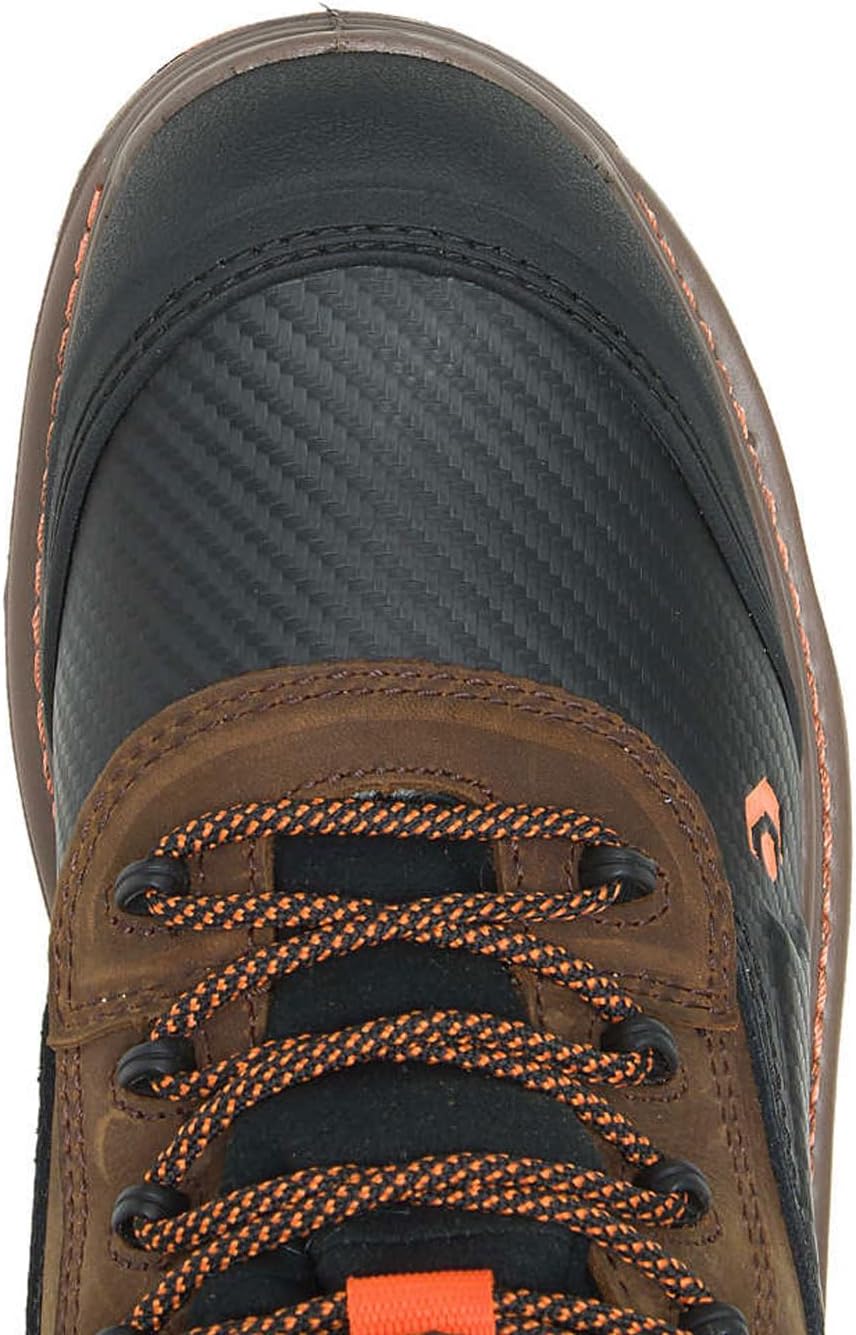
Wolverine
$179.95
In stock on Amazon
Check price on AmazonFrequently Asked Questions
Are Wolverine Overpass boots heavy enough to cause ankle fatigue on long shifts?
Owners consistently flag weight as the Overpass’s primary adjustment period — but the framing is almost always “first few weeks” rather than an ongoing problem. The multi-density midsole compensates meaningfully once the boot conforms. Workers with existing ankle or Achilles issues should factor in that heavier boots do increase lower-leg demand during break-in; after that period, owners report the cushioning payoff offsets the weight.
How do Floorhand boots hold up to standing water and puddles all day?
Owner accounts across long-run reviews specifically praise the Floorhand for this use case — walking through puddles repeatedly during shifts without moisture infiltration. The direct-attach sole construction reduces the seam vulnerability that plagues stitched-welt waterproof boots under sustained wet exposure. As noted in Working Person’s Store’s editorial overview of the Wolverine waterproof work boot lineup, the Floorhand’s waterproof membrane is designed for sustained trade-environment moisture rather than incidental splash protection.
Is the Raider DuraShocks actually useful for plantar fasciitis or just marketing?
Based on aggregated owner accounts, there is a genuine functional signal here. The plantar fasciitis case study above — where a warehouse worker eliminated chronic pain after switching from a purpose-built comfort brand — is the strongest single data point. Popular Mechanics’ The Best Work Boots According to Our Experts notes DuraShocks technology as one of the category’s more substantive cushioning systems. That said, plantar fasciitis is a medical condition; severe cases warrant a podiatrist’s input before relying on any boot as treatment.
How long do Wolverine boots typically last under daily hard use?
The Raider DuraShocks owner who confirmed more than two years of crack-free daily wear sets the high-end benchmark in this dataset. Heddels’ brand overview and heritage context on Wolverine notes the company’s century-plus history in heavy-duty leather construction. Under daily hard-use conditions, two to three years of service life before significant degradation is a reasonable expectation at this price tier — substantially better than fast-fashion workwear, though well short of the five-to-ten-year lifespan a Goodyear-welted resoleable boot can achieve with active maintenance.
Does the composite toe on the Overpass feel noticeably different from a steel toe after hours of wear?
Owners of the Overpass consistently report that the composite toe becomes functionally invisible after break-in — no localized pressure and no noticeable edge sensation during extended wear. Gear Junkie’s Best Work Boots of 2025: Tested and Reviewed notes that modern composite toe construction has closed most of the structural gap with steel while eliminating cold conductivity. The difference you’ll notice is the absence of negatives rather than a dramatic positive sensation.
The Decision Rule
If your shift is primarily on hard flat indoor surfaces and you don’t have joint issues: Overpass.
If you’re in field trades, outdoor maintenance, or any environment where water exposure is a daily reality and durability-over-cycles is your primary metric: Floorhand.
If you have plantar fasciitis, chronic foot fatigue, or knee pain from high step counts on hard floors — and long-run comfort matters more to you than any other variable: Raider DuraShocks.
All three boots share one underreported quality: reviewers across the board describe break-in as notably manageable — stiffness rather than pain, days rather than weeks. For a buyer conditioned by horror stories about breaking in heavy work boots, that’s worth factoring into the decision. Whichever of these three you land on, you’re unlikely to be limping through week two questioning your life choices.