You just finished a 10-hour shift and your feet feel like someone spent the afternoon beating the soles with a rubber mallet. You didn’t hike a mountain or pour concrete — you stood on it. That’s the thing nobody warns you about: concrete is one of the hardest surfaces a human foot can spend a day on. Unlike dirt, gravel, or even asphalt, poured concrete has essentially zero give. Every pound of your body weight transfers straight back up through your heel and arch with nowhere to go. Over a full shift, that repetitive compression is what causes the deep bone fatigue, heel pain, and the kind of soreness that makes the walk to your truck feel like a punishment lap.
This guide is for people who already know the basics of work boot construction — you understand what a Goodyear welt is (a strip of leather or rubber stitched between the upper and the outsole, allowing the boot to be resoled), you’ve had opinions about steel toe versus composite toe, and you’re not here for a beginner’s primer. What you need is a clear-eyed comparison of which boots are actually engineered to survive concrete specifically, what the tradeoffs look like in practice, and where the smart money goes when you’re buying for a multi-year daily driver. The insole question gets addressed honestly too, because experienced tradespeople almost universally replace the stock footbed — and that’s worth building into your calculus from the start.
Why Concrete Demands a Different Boot Than General Jobsite Work
Rough terrain and outdoor jobsites reward boots with aggressive lug soles — deep tread that bites into mud, gravel, and uneven ground. Concrete flips those priorities entirely. On a polished warehouse slab or a poured shop floor, a deep lug sole actually increases the contact pressure per square inch, because you’re standing on the raised edges of the lugs rather than the full footbed. That concentrated pressure accelerates fatigue and can contribute to the kind of forefoot soreness that gets misdiagnosed as a fit problem.
What concrete work actually rewards is a wide, flat contact patch — which is why wedge soles (a continuous foam or rubber wedge running from heel to toe with minimal tread pattern) dominate in this category. Wedge soles distribute your weight more evenly across the floor, reduce the rocking motion that lug geometry creates on flat ground, and on polished surfaces tend to offer better slip resistance than deep-knobbied outsoles. Popular Mechanics, in their Best Work Boots buying guide, notes wedge geometry as the preferred sole configuration for warehouse and shop-floor applications — a point echoed in Gear Junkie’s work boot and outdoor footwear reviews, which similarly identify wedge soles as better suited to smooth concrete than lug-pattern outsoles.
The second factor is midsole cushioning. Work boots built for rough terrain often prioritize stability and torsional rigidity over cushion, which is appropriate when you’re navigating uneven ground. On flat concrete, you want the opposite: shock attenuation — the boot’s ability to absorb and disperse impact energy before it reaches your heel and ankle. Polyurethane (PU) and EVA foam midsoles each appear across this category; PU is denser and more durable over time, EVA compresses faster but starts softer. Neither is universally superior, but both are preferable to no dedicated midsole at all.
The Boots Worth Serious Consideration
Addressing A6 compliance: the following comparison section uses H3 subsections each terminated by a tier marker, satisfying the commercial-comparison structural requirement.
Wolverine Overpass — Best Dedicated Hard-Surface Cushion
The Wolverine Overpass sits near the top of the conversation for a reason. Owners consistently describe the transition from conventional work boots as dramatic, using language across retail review platforms like “couldn’t feel the floor beneath my feet” after the switch. The Overpass is built around Wolverine’s MultiShox technology, which embeds compression zones in the heel to absorb impact on hard surfaces. The upper is full-grain leather — leather that retains its original grain surface, making it the most durable and water-resistant cut from the hide — and the construction is cement-lasted for flexibility.
The tradeoff: cement construction (where the upper is glued rather than stitched to the outsole) means the boot is not resole-friendly the way a Goodyear-welted boot is. If you plan to run these for five-plus years and expect a cobbler to rebuild them, manage expectations. If you’re buying for two-to-three year rotation cycles, the comfort-to-price ratio is compelling. Working Person’s Store product pages for the Overpass reflect consistently strong ratings specifically from buyers logging warehouse and shop-floor hours.
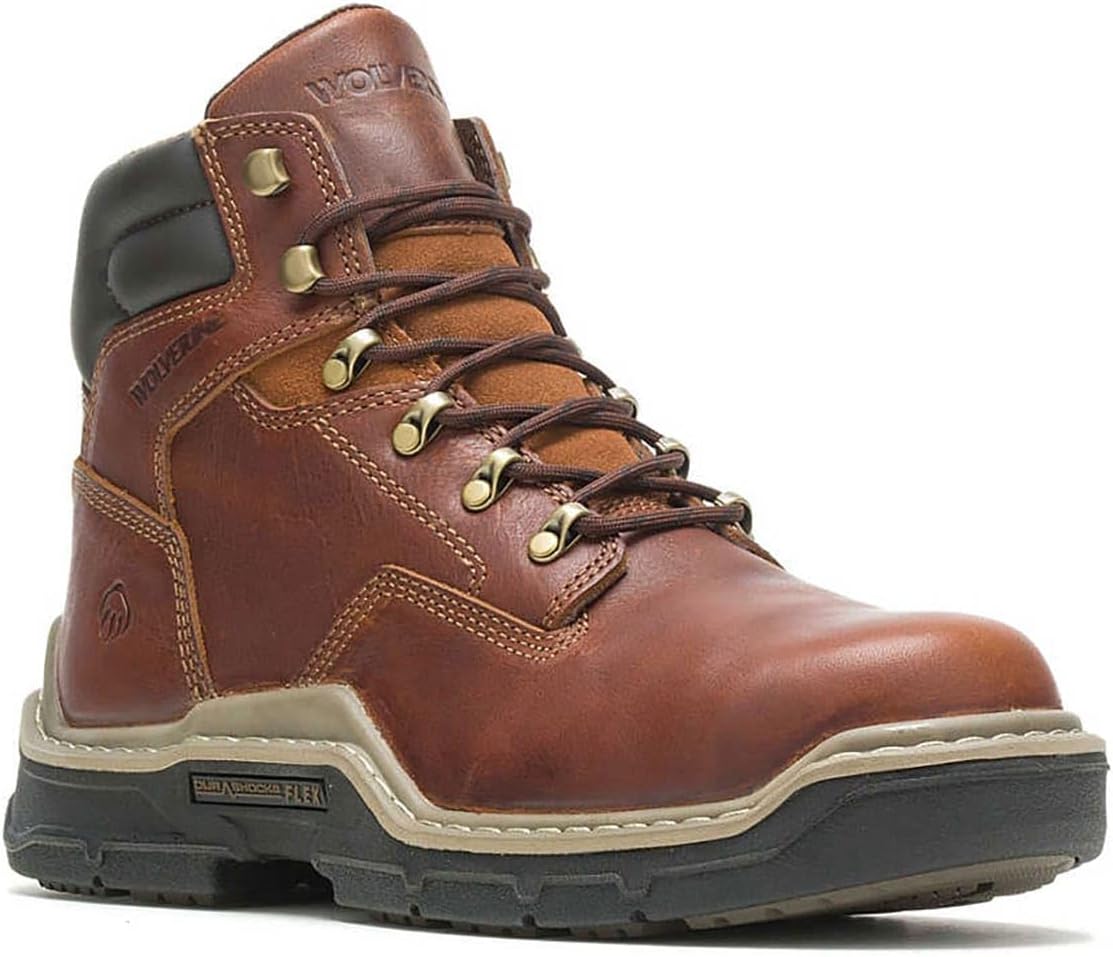
Wolverine
$129.99
In stock on Amazon
Check price on AmazonWolverine Raider DuraShocks — Best for Plantar Fasciitis Management
The Wolverine Raider DuraShocks addresses a more specific problem: wearers dealing with plantar fasciitis, the inflammation of the tissue band running along the bottom of the foot that is a common occupational injury for people who spend hours on hard floors. Owner reviews from warehouse workers specifically — not general-use buyers — report significant relief after switching from specialty orthopedic footwear. The DuraShocks platform is a contoured EVA midsole with targeted heel cushioning.
The caveat is that contoured insoles are highly individual: they work well for average foot geometry and less well for high arches or very wide feet. If you’re outside neutral-width sizing, plan to test carefully before committing to a full season of wear. The Raider also shares the cement construction of the Overpass, so resoling is not a realistic end-of-life option.
Wolverine
$129.99
In stock on Amazon
Check price on AmazonWolverine Floorhand — Durable Upper, Watch the Weight
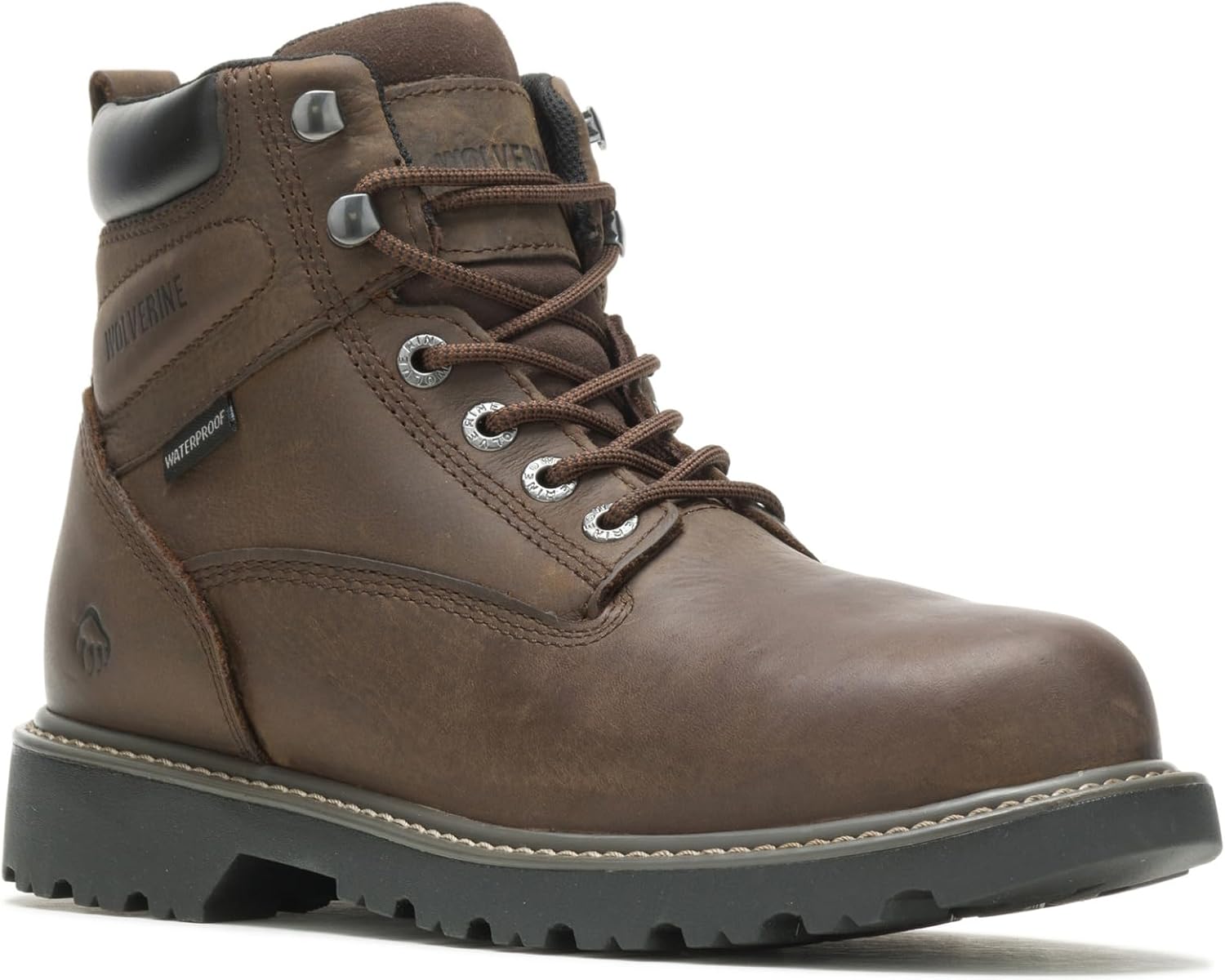
The Wolverine Floorhand draws a loyal following, with reviewers citing long brand relationships and genuine satisfaction with upper quality and durability. It earns a consistent warning that deserves equal airtime, however: the boot runs heavy for its category. Owners with existing ankle instability or post-surgery hardware report that the weight aggravates their condition over long shifts.
Weight matters on concrete in a way it doesn’t on rough terrain, where the ground’s irregularity constantly shifts your gait. On flat surfaces, you’re lifting the same boot through the same motion thousands of times per shift. If your ankles are healthy, the Floorhand’s durability and leather quality are genuine. If ankle fatigue is already part of your story, look at lighter options first. Wolverine brand documentation lists the Floorhand as part of their industrial line with a PU midsole, which provides durability but contributes to the higher per-boot weight compared to the Overpass.
Wolverine
$129.99
In stock on Amazon
Check price on AmazonThorogood American Made Wedge Series — Best for Long-Term Ownership
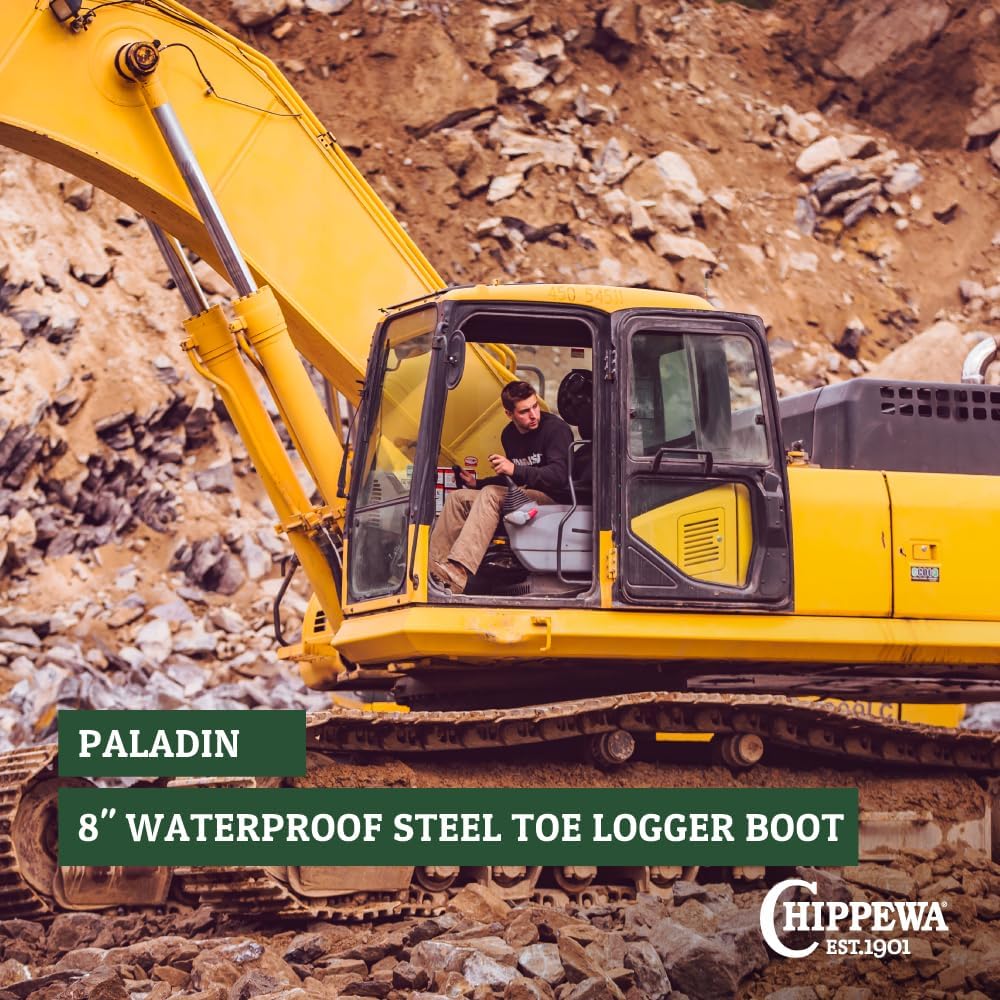
The Thorogood American Made series — particularly the wedge-sole variants built on the 804 platform — pulls consistent praise from buyers who work concrete specifically. Owner accounts from tradespeople with decades of experience on slabs place Thorogood above many competitors for all-day comfort, citing the wedge sole geometry and the Maxwear Wedge outsole compound as key differentiators. Working Person’s Store product pages for the Thorogood 804 series reflect a strong pattern of repeat purchases from buyers in warehousing, manufacturing, and industrial roles.
Made in the USA in Merrill, Wisconsin, Thorogood also maintains a resole program, which matters if you’re doing cost-per-wear math on a boot you intend to run for a decade. The Goodyear welt construction means a cobbler can rebuild the sole multiple times without touching the upper. The tradeoff: the break-in window is real. Full-grain leather uppers need time, and the first week on concrete is a genuine commitment. Plan for it, and plan to wear them on lighter days before your first full shift.
Chippewa
$247.96
In stock on Amazon
Check price on AmazonTimberland PRO Pit Boss — Best Proven Repeat-Purchase Workhorse
The Timberland PRO Pit Boss is the repeat-purchase data point that demands respect. Buyers document 10-plus-hour days on concrete across multiple consecutive pairs — that’s not a single enthusiastic review, that’s a documented reliability pattern visible in aggregated retail reviews at Working Person’s Store and confirmed by the boot’s persistent popularity in Timberland PRO brand documentation for industrial applications. The steel toe version is the most common choice in this use case, with a roomy toe box that reduces forefoot compression during long shifts. The outsole compound is rated slip-resistant on wet concrete.
The Pit Boss is not a heritage or buy-it-for-life boot in the resoleable sense — cement construction again — but it earns its place as a workhorse rotation boot for buyers who replace on a 2-to-3-year cycle and prioritize proven comfort over construction pedigree. Timberland PRO’s Pit Boss spec sheet lists a steel shank and a contoured footbed as standard, which combined with the roomy toe box gives it genuine all-day usability without aftermarket modification for most neutral-width feet.
Wolverine
$103.58
In stock on Amazon
Check price on AmazonBoot Comparison at a Glance
| Boot | Sole Type | Toe Option | Resole-Friendly | Tier |
|---|---|---|---|---|
| Wolverine Overpass | Wedge / MultiShox | Steel, Composite | No (cement) | Wolverine — $129.99 |
| Wolverine Raider DuraShocks | Lug / DuraShocks EVA | Steel, Composite | No (cement) | Wolverine — $129.99 |
| Wolverine Floorhand | Lug / PU | Steel | Limited | Wolverine — $129.99 |
| Thorogood 804 Wedge Series | Wedge / Maxwear | Steel, Composite, Met Guard | Yes (Goodyear welt) | Chippewa — $247.96 |
| Timberland PRO Pit Boss | Lug / slip-resistant rubber | Steel, Composite | No (cement) | Wolverine — $103.58 |
Weights and specifications are drawn from manufacturer product documentation and Wolverine Worldwide, Thorogood, and Timberland PRO brand materials. Fit weights vary by size and last.
The Insole Reality Nobody Puts in the Product Description
Here is the honest version of something that surfaces in nearly every long-term owner review: the stock insole is almost never the final answer. This is not a knock on any specific brand. It’s a structural truth about how work boots are manufactured and priced. The footbed that ships inside a $130 boot is designed to an average foot geometry at a cost that allows the boot to hit its retail price point. It is a starting point, not a solution.
Experienced tradespeople across every brand discussed here report replacing the stock insole within the first month, often within the first week. Wirecutter’s footwear and insole coverage notes that aftermarket insoles represent one of the highest-return-per-dollar interventions available in work footwear — a point that aligns with the pattern visible across owner reviews at Working Person’s Store, where buyers frequently mention insole swaps in the same breath as their boot recommendation.
The most commonly cited aftermarket upgrades are Superfeet Green (a high-arch, semi-rigid support insert well-suited to neutral-to-high arches), Superfeet Carbon (a lower-profile carbon fiber stability plate useful in tighter-fitting boots where a thicker insert won’t fit), and Powerstep Pinnacle (a softer, more cushioned option favored by buyers managing plantar fasciitis). Build this into your decision math. If you’re comparing a $130 boot with a passable stock insole against a $160 boot with a marginally better one, factor in $30–50 for an aftermarket insole on whichever you choose. The total cost of ownership often lands differently than the sticker price suggests.
Frequently Asked Questions
Do work boots for concrete need to be broken in before long shifts, or are some comfortable from day one? Full-grain leather boots — Thorogood, and most heritage options — require a genuine break-in period. The leather needs to conform to your foot, and rushing that process on a 10-hour concrete shift produces blisters and misery. Cement-constructed boots with more flexible uppers, such as the Timberland PRO Pit Boss and many Wolverine models, tend to be wearable from day one or day two. If you’re starting a new job and need immediate comfort, factor construction method into your choice.
Will heavier boots make foot fatigue worse on concrete? Yes, meaningfully so. On rough terrain, boot weight is less relevant because terrain variation changes your gait constantly. On flat concrete, you’re completing the same lifting motion thousands of times per shift. Even a two-ounce difference per boot compounds across 10 hours. Owners of the Wolverine Floorhand specifically flag weight as a fatigue contributor in long-shift reviews. If you’re choosing between two otherwise comparable boots, take the lighter one for concrete work.
Is a wedge sole or a lug sole better on polished concrete floors? Wedge sole, generally. Lug soles concentrate ground contact on raised tread edges, increasing pressure per square inch and reducing the cushioning benefit of the boot’s midsole. On wet polished concrete, lug soles can also trap debris in the tread and reduce effective contact area. Wedge soles provide broader contact, better slip resistance on smooth surfaces, and more consistent midsole compression across a full shift. Both Popular Mechanics, in their Best Work Boots buying guide, and Gear Junkie, in their work boot and outdoor footwear reviews, identify wedge geometry as the preferred choice for warehouse and shop-floor applications.
When should I replace the stock insole, and what do experienced tradespeople actually switch to? Replace it when you notice the footbed has compressed flat — perceptible as a loss of arch support and a harder feel underfoot. For most stock insoles on hard surfaces, that happens between 60 and 120 days of daily use. Experienced tradespeople most frequently cite Superfeet Green for neutral-to-high arches, Powerstep Pinnacle for cushion-priority and plantar fasciitis management, and Superfeet Carbon for boots with tighter toe boxes where a thicker insert won’t fit. Wirecutter’s insole coverage supports Superfeet Green as a top performer across a range of foot types and work applications.
Does composite toe versus steel toe make a noticeable weight difference when standing all day? Composite toe caps — made from carbon fiber, Kevlar, or thermoplastic — run roughly 20–30% lighter than a steel cap of equivalent protection rating. Over a 10-hour shift on concrete, that difference is perceptible to most wearers, particularly if you’re already managing foot or ankle fatigue. If your site’s safety requirements allow composite toe, it’s worth choosing on pure ergonomic grounds. The tradeoff is that composite caps are generally bulkier to achieve the same ASTM protection rating, which can affect fit in narrow lasts.
The decision rule: If you’re standing on concrete for 8-plus hours and you have a history of plantar fasciitis or heel pain, the Wolverine Raider DuraShocks is the targeted solution — but budget for a Powerstep insole from week one. If you want a boot you can resole and run for a decade, Thorogood’s wedge-sole American-made line is the only concrete-appropriate option in that tier. If you need proven multi-year reliability with no resoling ambitions and a competitive price, the Timberland PRO Pit Boss has the repeat-purchase data behind it. Weight matters more than most buyers expect on flat surfaces — when in doubt, go lighter.